Types of Oil Seals and Their Uses: A Maintenance Guide
Types of oil seals explained: single and double lip, TC and SC codes, rotary shaft seals, Viton and PTFE, plus why seals fail and how to fit them properly.
By Harish Haseeb23 Nov 20268 min read
An oil seal is one of the cheapest parts on a gearbox or pump, and one of the most expensive to get wrong. When it leaks, the lubricant runs out, dirt and water get in, and the bearing it was protecting is next to fail. Many "bearing failures" in maintenance records are really seal failures that took a bearing with them.
This post explains what an oil seal does, how it is built, the common types of oil seals and where each is used, why seals fail, and what to check when you fit or inspect one. It is written for plant and maintenance engineers who pick replacement seals from a shelf and need to get the type, material and size right the first time.
What an oil seal does
An oil seal (also called a lip seal or rotary shaft seal) sits where a rotating shaft leaves a housing. It has three jobs: keep the lubricant in, keep dust, dirt and water out, and by doing both, protect the bearings inside. It does this with a flexible lip pressed lightly against the shaft, riding on a very thin film of lubricant. Too little contact and it leaks; too much and it overheats and wears.
The parts of an oil seal
- Outer cover or case. The outside diameter that fits into the housing bore. It may be rubber-covered for a better static seal in the bore, or bare metal.
- Metal case. The stiff insert that gives the seal its shape and holds it in the bore.
- Sealing lip. The flexible edge that touches the shaft and does the sealing.
- Garter spring. A coiled spring round the lip that keeps a steady pressure on the shaft as the lip wears and as temperature changes.
- Shaft. Strictly part of the machine, not the seal, but its surface finish, hardness and roundness decide how long the seal lasts.
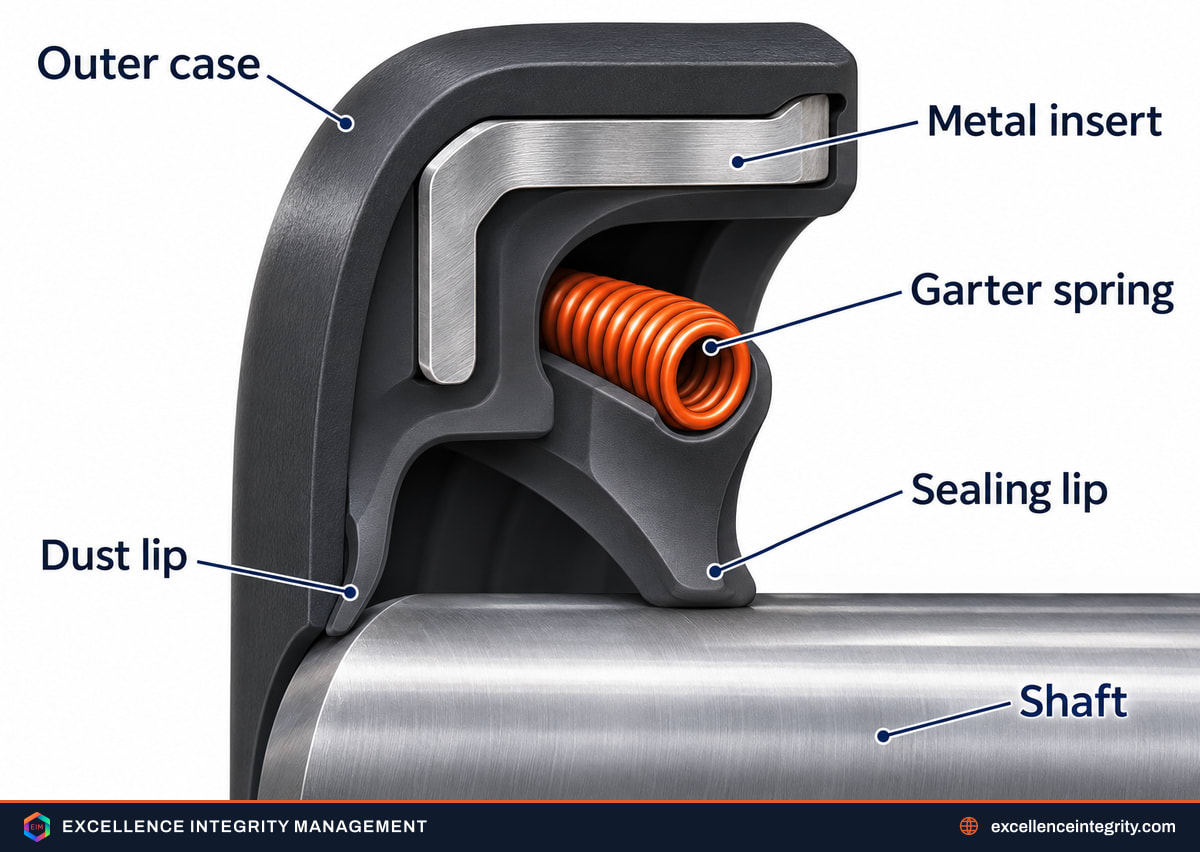
Types of oil seals by lip: single lip and double lip
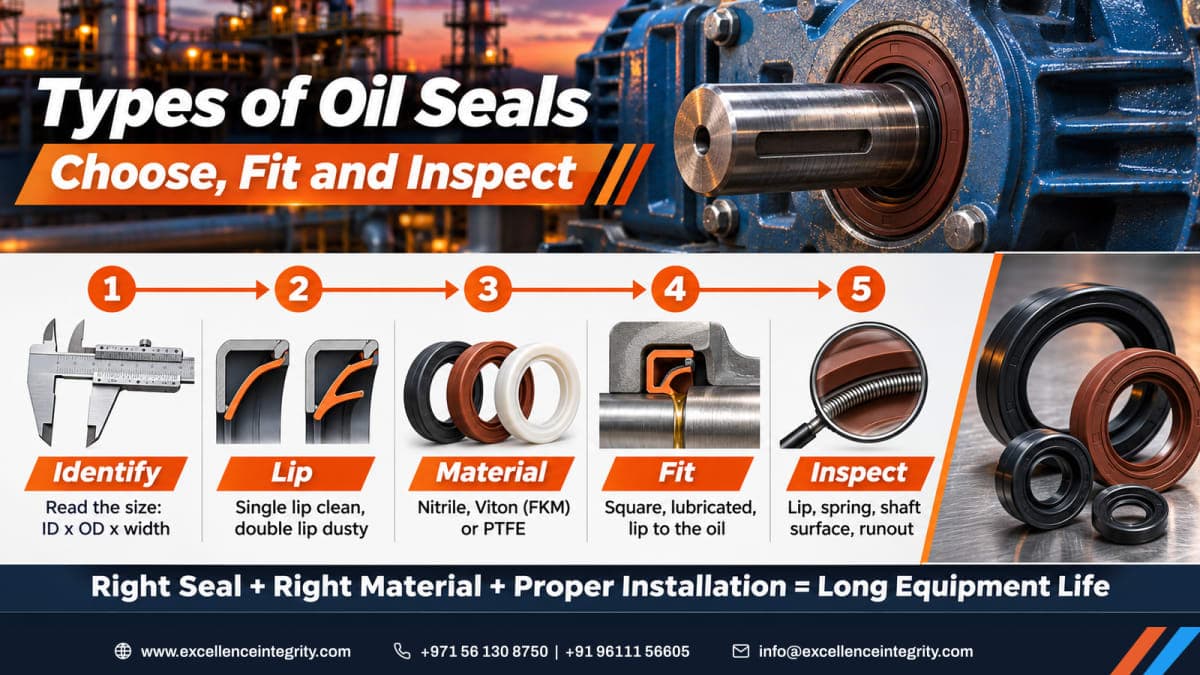
Single lip seals have one sealing lip and suit clean conditions where the main job is keeping lubricant in. Electric motors and enclosed gearboxes use them widely.
Double lip seals add a second lip, usually facing outward as a dust or dirt excluder. They suit dusty or dirty surroundings and heavy-duty service, such as heavy gearboxes and agricultural equipment. The space between the lips should be packed with grease on installation so the outer lip does not run dry.
Seal codes: what TC and SC mean
Many suppliers use letter codes to describe the types of oil seals they make and how each is built. In common use:
- TC usually means a rubber-covered outer case, a main lip with a garter spring, and an extra dust lip. It is a general-purpose choice for pumps, motors and high-speed shafts where some dirt is present.
- SC usually means a rubber-covered outer case with a single, spring-loaded lip and no dust lip, used in cleaner conditions, including many automotive and hydraulic applications.
The codes are not universal and differ between manufacturers, so always read the supplier's code table before ordering a like-for-like replacement.
Rotary shaft and radial shaft seals
You will see both names in catalogues and on drawings. They describe the same broad family: lip seals that seal on a rotating shaft, with the lip pressing radially onto the shaft surface. Rotary shaft seals are the standard choice on centrifugal pumps, compressors and gearboxes. Radial shaft seal designs aimed at low friction are common on electric motors and engine crankshafts, where heat from the lip matters.
Material choice: nitrile, Viton (FKM) and PTFE
The lip material has to suit the fluid, the temperature and the shaft speed. Three families cover most plant needs:
| Material | Strengths | Typical uses |
|---|---|---|
| Nitrile rubber (NBR) | General purpose, good with mineral oils and greases | Standard gearboxes, pumps, motors |
| Viton (FKM) | High temperature and chemical resistance | Chemical plants, fuel and oil systems, hot gearboxes |
| PTFE | Low friction and wide chemical resistance | Food and pharmaceutical plants, corrosive environments, dry or poorly lubricated duty |
The limits for each grade, including temperature and surface speed, come from the seal manufacturer's data. Choosing a seal only by size, and ignoring material, is a common reason a new seal fails within weeks.

Why oil seals fail
When you pull out a leaking seal, look at it before you throw it away. The lip and the shaft usually show what caused the oil seal failure:
- Hardened or cracked lip. Usually heat: the seal ran hotter than its material allows, or ran dry.
- Shaft scoring or a wear groove. The lip has worn a groove in the shaft, or the shaft was scored, so even a new seal cannot seal on it.
- Misalignment or runout. The shaft is not centred in the bore, or it wobbles, so the lip is overloaded on one side and lifts on the other.
- Damage at installation. A lip turned back, cut on a keyway or sharp shoulder, or a seal pushed in crooked.
- Wrong material. The rubber has swollen, softened or hardened because it does not suit the fluid or temperature.
- Contamination. Abrasive dirt between the lip and the shaft wears both quickly.
- Dry running. No lubricant at the lip, often on start-up or after a level drops.
- Over-pressure. Standard lip seals are made for little or no pressure difference. Pressure in the housing pushes the lip hard onto the shaft and wears it out.
Fitting and inspection checklist
- Check for leakage and note where it comes from: the lip, the outer diameter in the bore, or somewhere else, such as a gasket.
- Inspect the lip for cuts, hardening and wear, and check the spring is in place and not stretched.
- Check the shaft surface for grooves, scoring and corrosion where the lip runs. A worn shaft can be repaired with a wear sleeve or by moving the seal position, if the design allows.
- Check dimensions of the shaft and bore against the seal size.
- Check shaft runout and bearing condition, because a loose bearing lets the shaft move and the seal cannot follow.
- Confirm the operating temperature and fluid match the seal material.
- Fit it squarely with a proper driver, lubricate the lip, protect it over keyways and threads, and face the lip the right way, normally toward the lubricant.
- Check after start-up for leaks and for an unusually hot seal area.
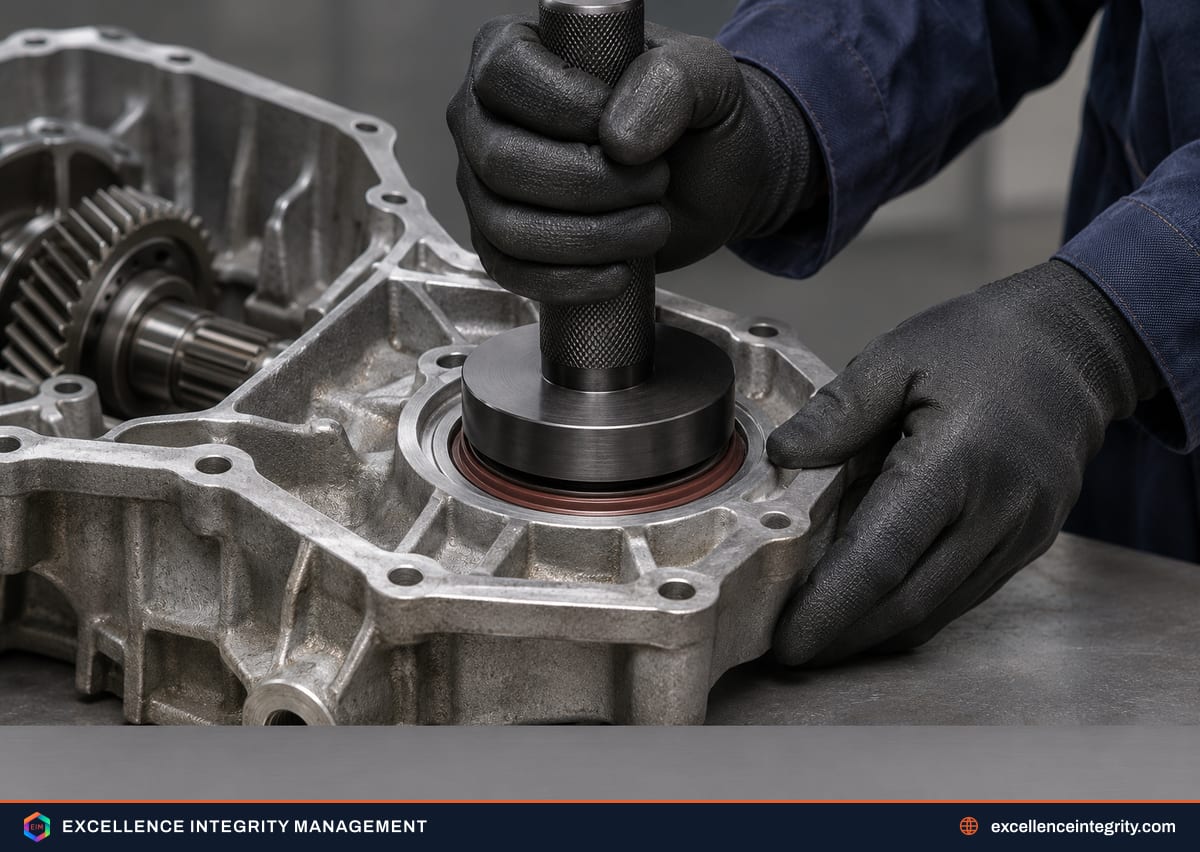
Reading an oil seal size
Seal sizes are normally given as inside diameter x outside diameter x width. A seal marked 35 x 52 x 8 mm fits a 35 mm shaft, a 52 mm housing bore and needs 8 mm of axial space. Always check the manufacturer's specification as well, because two seals with the same size can differ in lip design, material and code.
Right seal, right material and proper installation are what give long equipment life.
Frequently asked questions
What is a TC oil seal?
A TC oil seal usually has a rubber-covered outer case, a main lip with a garter spring and an extra dust lip. It is a general-purpose choice for pumps, motors and high-speed shafts where some dirt is present. Codes differ between manufacturers, so check the supplier's code table before ordering a like-for-like replacement.
What is the difference between a single lip and a double lip oil seal?
A single lip seal has one sealing lip and suits clean conditions where the main job is keeping lubricant in, as in electric motors and enclosed gearboxes. A double lip seal adds a second, outward-facing lip that keeps dust and dirt out. Pack the space between the lips with grease on installation so the outer lip does not run dry.
When should you use a Viton oil seal instead of nitrile?
Nitrile is the general-purpose material and works well with mineral oils and greases in standard gearboxes, pumps and motors. A Viton oil seal is the step up for higher temperatures and harsher chemicals, such as chemical plants, fuel and oil systems and hot gearboxes. The temperature and speed limits for each grade come from the seal manufacturer.
How do you read an oil seal size?
Oil seal sizes are given as inside diameter x outside diameter x width. A seal marked 35 x 52 x 8 mm fits a 35 mm shaft and a 52 mm housing bore, and needs 8 mm of axial space. Two seals of the same size can still differ in lip design, material and code.
Where to go from here
Oil seals work alongside bearings, gland packing and mechanical seals, and failures often involve more than one of them. Types of gland packing covers the older sealing method still found on many pumps and valves, and rotating equipment maintenance in oil and gas sets out the wider maintenance strategy. The rotating equipment maintenance and troubleshooting course covers seals, bearings and failure analysis hands-on, and the SMRP CMRP exam preparation suits engineers moving into reliability roles.
Exam preparation
Preparing for SMRP CMRP?
Practise with exam-style questions, timed mocks and study notes. 1,448 questions in the bank.