API 571 Corrosion and MaterialsExam Guide & Preparation
API 571 Corrosion and Materials certifies your ability to identify, assess, and prevent the damage mechanisms that affect fixed equipment in refining and petrochemical facilities, based on API RP 571, Damage Mechanisms Affecting Fixed Equipment in the Refining Industry.
Question Bank + Study Notes
API 571 Corrosion and Materials certifies your ability to identify, assess, and prevent the damage mechanisms that affect fixed equipment in refining and petrochemical facilities, based on API RP 571, Damage Mechanisms Affecting Fixed Equipment in the Refining Industry.
It's one of the most widely recognized credentials for inspectors, corrosion engineers, and asset integrity professionals working in oil, gas, and petrochemical operations. Unlike API's equipment-specific certifications (510, 570, 653), which focus on inspecting a particular asset type, API 571 is mechanism-focused: it tests your ability to explain why equipment degrades, not just how to inspect it once it has.
Rather than testing memorized definitions, the exam is scenario-heavy. You're given a description of operating conditions, material of construction, and observed symptoms, and asked to identify which damage mechanism is at play and what inspection or mitigation approach fits. This mirrors real fitness-for-service and turnaround planning work, where an inspector has to reason backward from symptoms to root cause rather than recite a textbook definition.
Whether you're looking for a structured API 571 course, self-paced API 571 online training, or simply a focused way to study for API 571 certification around a working schedule, EIM's API 571 training platform is built to fit all three, with both self-prep and live instructor-led options available.
Content reviewed by Mr. Deepak Rawtal
Senior Metallurgical Inspection Engineer, 45 years of industry experience in NDT, materials testing, and quality assurance
API 571 vs API 510, 570, and 653
API 510, 570, and 653 each certify inspection competency for a specific equipment category: pressure vessels, piping systems, and aboveground storage tanks respectively. Each of those exams tests inspection codes, repair rules, and equipment-specific practice for that asset type.
API 571 sits underneath all three. Instead of asking how to inspect a pressure vessel or a tank, it asks why any of that equipment degrades in the first place, covering the full range of damage mechanisms that show up across vessels, piping, and tanks alike. This is why it pairs so naturally with the other three: an API 510-certified inspector who also holds 571 can diagnose why a vessel is corroding, not just confirm that it is, which materially changes how a fitness-for-service assessment gets written. Holding a current API 510, 570, or 653 certification automatically qualifies you to sit for API 571.
Qualification & Prerequisites
What the Exam Actually Tests
Five domains, weighted by question share. This is the map the question bank is built directly against.
Uniform corrosion, pitting, galvanic corrosion, CO2 corrosion, cooling water corrosion
Sulfidation, oxidation, carburization, nitriding, fuel ash corrosion
Creep, fatigue, thermal fatigue, erosion, brittle fracture, temper embrittlement
Chloride SCC, caustic cracking, hydrogen-induced cracking, amine cracking
Mechanisms not covered above, general application and inspection principles
| Domain | Covers | |
|---|---|---|
| 01 | Low-Temperature Corrosion | Uniform corrosion, pitting, galvanic corrosion, CO2 corrosion, cooling water corrosion |
| 02 | Elevated-Temperature Corrosion | Sulfidation, oxidation, carburization, nitriding, fuel ash corrosion |
| 03 | Metallurgical & Mechanical Damage | Creep, fatigue, thermal fatigue, erosion, brittle fracture, temper embrittlement |
| 04 | Environment-Assisted Cracking | Chloride SCC, caustic cracking, hydrogen-induced cracking, amine cracking |
| 05 | Other Damage Mechanisms | Mechanisms not covered above, general application and inspection principles |
01. Low-Temperature Corrosion
02. Elevated-Temperature Corrosion
03. Metallurgical & Mechanical Damage
04. Environment-Assisted Cracking
05. Other Damage Mechanisms
How to Register and What to Expect on Exam Day
API 571 is administered through Prometric testing centers and registered directly through API's own certification portal, not through EIM or any third-party training provider. You'll need to submit your eligibility documentation, either your active API 510/570/653 certification number, or your education and experience records for the combination route, as part of registration.
API's 2026 fee schedule lists the official exam fee within the same ICP structure used across API's inspector certifications. This official fee covers only your Prometric exam seat; it does not include EIM's study material, question bank, or structured exam preparation. Once approved, you can book a seat at any Prometric center offering the exam, subject to seat availability in your region.
How to Prepare for API 571 Corrosion and Materials
Self-paced by default. Add live instruction if you want structured guidance.
API 571 Corrosion and Materials Question Bank
3357 practice questions across 4 modules, mapped to every BOK domain. Study at your own pace, no fixed schedule required.
Add Live Instructor-Led Training
5-week structured program. Runs on a fixed cohort schedule, check current availability.
Bundle: Question Bank + Live Course
Best for candidates who want structured teaching plus unlimited self-paced practice
Sample Practice Questions
A carbon steel furnace tube operating at 620°C in a sulfur-containing environment shows accelerated wall loss. Which damage mechanism is most likely responsible?
Austenitic stainless steel piping, insulated and exposed to intermittent moisture ingress, is at highest risk of which cracking mechanism?
What's Included in the Self-Prep Package
API 571 Question Bank
3,155 questions across 4 volumes, mapped to every BOK domain, with a worked explanation for every answer.
API 571 Study Notes
Downloadable study material covering all 5 damage mechanism domains and their real-world application.
API 571 Mock Test
Full-length practice exam mirroring the real 110-question, 3-hour-15-minute format.
Related Certifications
API 580 Risk Based Inspection Professional
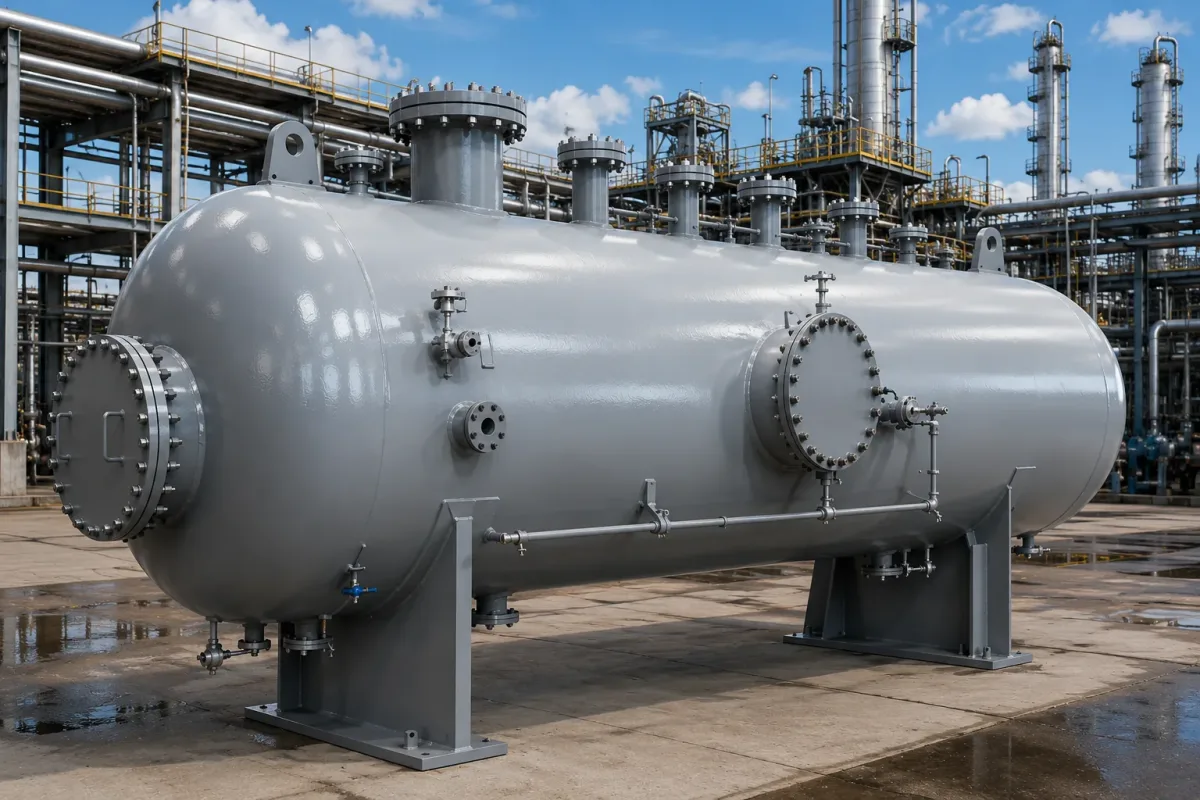
API 510 Pressure Vessel Inspector
AMPP SCT Senior Corrosion Technologist
AMPP ICT Internal Corrosion Technologist
AMPP SICT Senior Internal Corrosion Technologist
AMPP CT/CTech Corrosion Technician / Technologist
Common Questions
What is the API 571 Corrosion and Materials certification?
Is the API 571 exam open-book?
How long is the API 571 certification valid?
How much does API 571 certification cost?
Who is eligible to take the API 571 exam?
What does EIM's API 571 training include?
Does EIM offer a live API 571 course?
Is API 571 recognized as an inspector certification internationally?
Why API 571 Corrosion and Materials Matters for Asset Integrity Careers
API 571 sits at the center of asset integrity work because damage mechanisms are the root cause behind nearly every inspection finding, repair decision, and fitness-for-service assessment in refining and petrochemical operations. Understanding how and why equipment degrades, not just how to inspect it, is what separates a certified API 571 professional from a general inspector.
Because the exam leans heavily on scenario recognition rather than rote memorization, effective API 571 exam preparation means working through realistic damage mechanism situations repeatedly, which is why EIM's large, BOK-mapped question bank tends to outperform passive reading of the reference document alone. Every question in the API 571 question bank includes a worked explanation, so an incorrect answer becomes a diagnostic tool for where your understanding of a specific mechanism has a gap.
- ✓3357 practice questions
- ✓4 structured modules
- ✓1 Year
- ✓Mobile-friendly platform
Add Live Training
Sat/Sun, 6:00 PM - 8:00 PM UAE
Confused about which certification is right for you? Talk to our experts.