CSWIP Plant InspectorExam Guide & Preparation
CSWIP PI Plant Inspector is a modular, multi-level certification program (governed by CSWIP document PI-11-01) covering general and mechanical plant inspection across pressure equipment and piping systems. Unlike CSWIP's welding inspector track (3.0/3.1/3.2), Plant Inspector runs across three levels, Level 1, Level 2, and Level 3, with Level 2 and 3 further offering specific technical endorsements (2A/2B/2C and 3A through 3I).
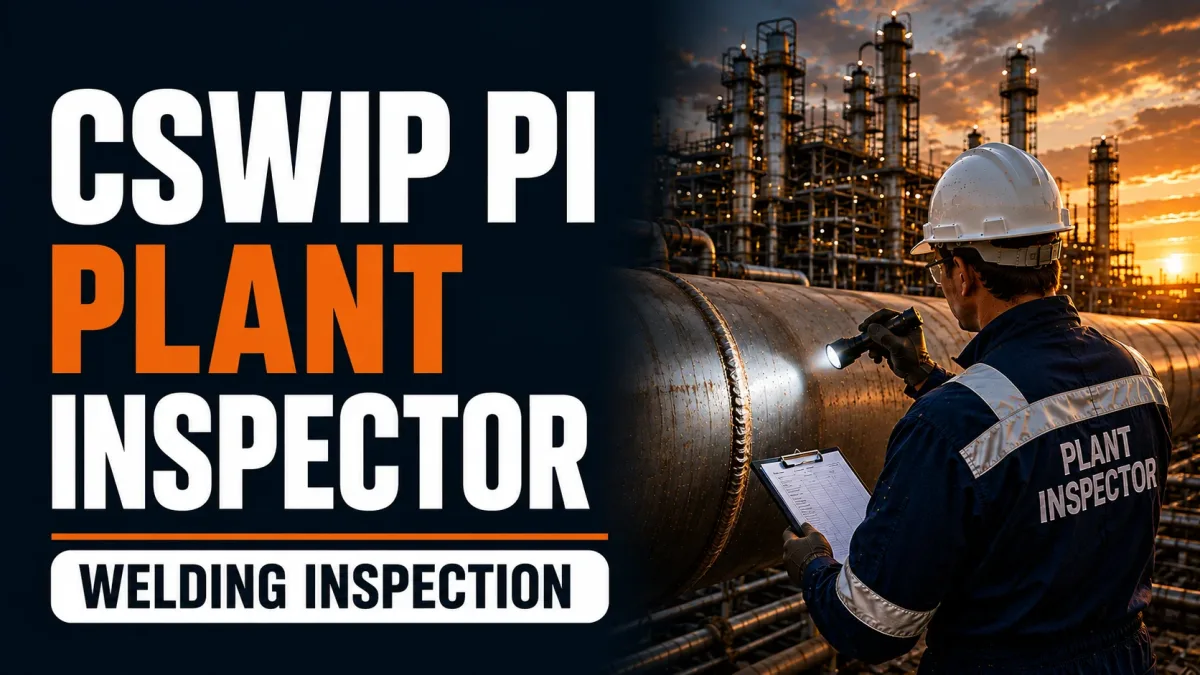
CSWIP PI Plant Inspector is a modular, multi-level certification program (governed by CSWIP document PI-11-01) covering general and mechanical plant inspection across pressure equipment and piping systems. Unlike CSWIP's welding inspector track (3.0/3.1/3.2), Plant Inspector runs across three levels, Level 1, Level 2, and Level 3, with Level 2 and 3 further offering specific technical endorsements (2A/2B/2C and 3A through 3I).
What makes CSWIP PI genuinely distinctive is how directly its higher-level modules map onto API's own certification content: Module 2 covers damage mechanism assessment based on API RP 571, Module 3 covers Risk Based Inspection based on API 580 and 581, Module 4 covers Fitness-for-Service based on API 579-1, Module 6 covers Pressure Vessel Inspection based on API 510, Module 7 covers Piping Inspection based on API 570, and Module 8 covers Aboveground Tank Inspection based on API 653. Exams for these modules are frequently open-book with the specific API reference document provided during the exam.
Level 1 (Module 1) covers the rules, regulations, and duties of a plant inspector (Part A) plus inspection methods (Part B), and must be completed before certification in any higher-level module is awarded. Level 2 focuses on asset integrity management skills, inspection and maintenance planning, integrity assessment, and repair based on API and ASME standards and best practice.
Whether you're looking for a structured CSWIP PI course, self-paced CSWIP PI online training, or simply a focused way to study for CSWIP PI certification requirements around a working schedule, EIM's CSWIP PI training platform is built to fit all three.
CSWIP PI vs API's Equipment-Specific Inspector Exams
API's equipment-specific certifications (510, 570, 653) and CSWIP PI's higher-level modules cover substantially overlapping technical ground, since CSWIP explicitly built several PI modules around the same API reference documents. The genuine difference is administrative and structural: API certifications run through API's own Individual Certification Program with Prometric testing, while CSWIP PI runs through TWI's certification scheme with its own modular, level-and-endorsement structure and often open-book exams using the specific API document provided.
For a candidate deciding between paths, CSWIP PI's modular structure means you can pursue individual endorsements (like Module 6's API 510-aligned pressure vessel content) without necessarily needing full API 510 certification itself, useful if your employer or region specifically recognizes CSWIP credentials, or if you're building toward CSWIP PI Level 3's broader integrity management scope rather than a single equipment-specific API credential.
Qualification & Prerequisites
What the Program Actually Covers
Five domains, weighted by question share. This is the map the question bank is built directly against.
Rules, regulations, and duties of the plant inspector (Module 1, Part A)
General inspection methods and techniques (Module 1, Part B)
Damage mechanism assessment per API RP 571, RBI per API 580/581 (Modules 2 & 3)
FFS assessment per API 579-1/ASME FFS-1, weld repair of pressure equipment and piping (Modules 4 & 5)
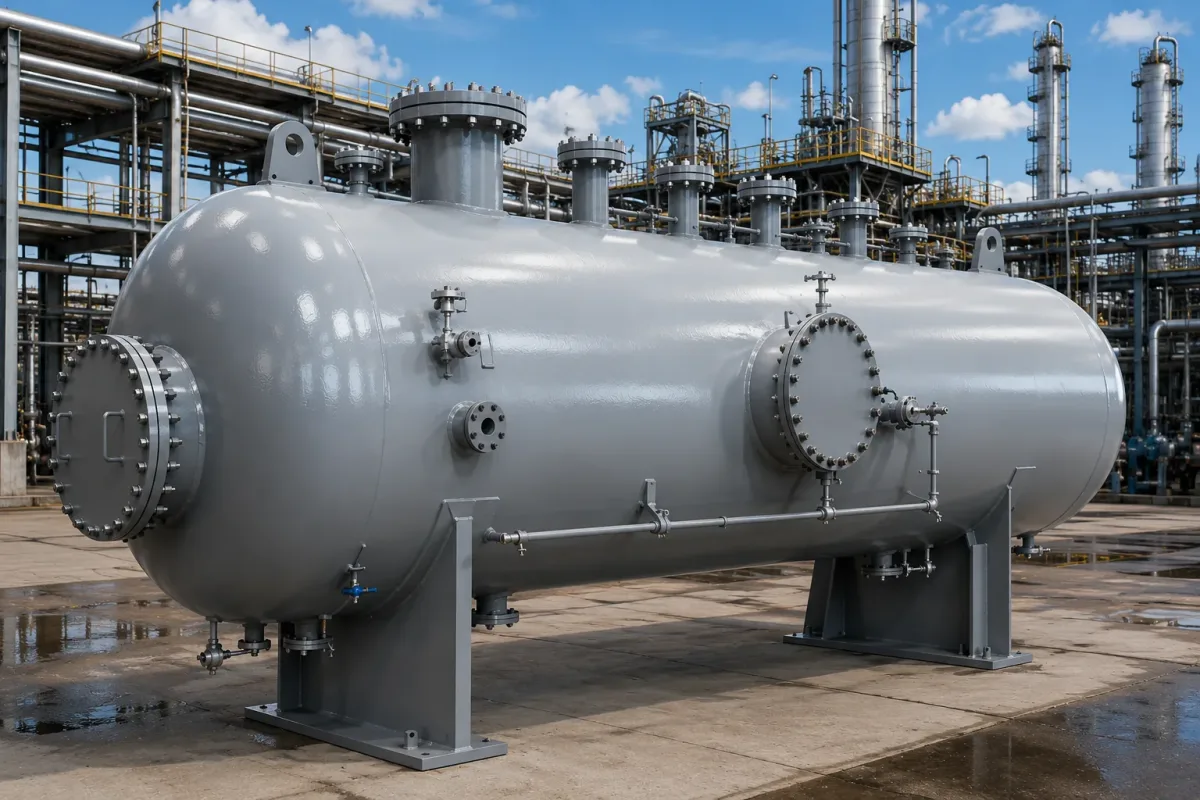
Pressure vessel inspection per API 510, piping inspection per API 570, tank inspection per API 653 (Modules 6, 7 & 8)
| Domain | Covers | |
|---|---|---|
| 01 | Plant Inspector Duties & Regulations (Level 1) | Rules, regulations, and duties of the plant inspector (Module 1, Part A) |
| 02 | Inspection Methods (Level 1) | General inspection methods and techniques (Module 1, Part B) |
| 03 | Damage Mechanisms & Risk-Based Inspection (Level 2) | Damage mechanism assessment per API RP 571, RBI per API 580/581 (Modules 2 & 3) |
| 04 | Fitness-for-Service & Weld Repair (Level 2) | FFS assessment per API 579-1/ASME FFS-1, weld repair of pressure equipment and piping (Modules 4 & 5) |
| 05 | Equipment-Specific Inspection Endorsements (Level 2/3) | Pressure vessel inspection per API 510, piping inspection per API 570, tank inspection per API 653 (Modules 6, 7 & 8) |
01. Plant Inspector Duties & Regulations (Level 1)
02. Inspection Methods (Level 1)
03. Damage Mechanisms & Risk-Based Inspection (Level 2)
04. Fitness-for-Service & Weld Repair (Level 2)
05. Equipment-Specific Inspection Endorsements (Level 2/3)
How to Register and What to Expect on Exam Day
Candidates register and enroll through a TWI-approved training provider, not through EIM directly. Level 1 (Module 1, Parts A and B) must be completed and certified before candidates can be awarded certification in any higher-level module. Students unable to meet the knowledge or experience requirements for direct entry onto Level 1 can acquire the needed background through supplementary training modules first.
Exam formats vary by module: typically Paper 1 (multiple-choice questions) and Paper 2 (essay questions and case studies), with several modules run open-book using the specific API reference document (for example, API RP 571, API 510, or API 579) provided during the exam. Check your chosen training provider's current course and exam fees, which vary by provider, region, and module, separate from EIM's CSWIP PI self-prep pricing.
How to Prepare for CSWIP Plant Inspector
Self-paced by default. Add live instruction if you want structured guidance.
CSWIP Plant Inspector Question Bank
1120 practice questions across 4 modules, mapped to every BOK domain. Study at your own pace, no fixed schedule required.
Sample Practice Questions
A pressure vessel is being risk-ranked as part of a CSWIP PI Module 3 assessment. It shows high probability of failure due to an actively progressing damage mechanism, but sits in a low-consequence location with minimal inventory. Where should it land on a standard risk matrix?
During a Module 4 fitness-for-service assessment, a Level 1 screening calculation produces a comfortably passing remaining-life result for a corroded component. What is the typically appropriate next step?
What's Included in the Self-Prep Package
CSWIP PI Question Bank
Scenario-based questions covering Level 1 fundamentals and Level 2/3 modules mapped to API standards.
CSWIP PI Study Notes
Downloadable study material organized by module, from Level 1 duties through equipment-specific endorsements.
CSWIP PI Mock Test
Practice test structured around the program's multiple-choice and case-study exam format.
Related Certifications
Common Questions
What is the CSWIP PI certification?
Do I need Level 1 before pursuing higher CSWIP PI modules?
How is CSWIP PI related to API certifications?
How is the CSWIP PI exam structured?
How much does CSWIP PI certification cost?
What is covered in CSWIP PI Level 2?
What does EIM's CSWIP PI training include?
Can I pursue a single CSWIP PI endorsement without the full program?
Why CSWIP Plant Inspector Matters for Asset Integrity Careers
Because several CSWIP PI modules are explicitly built around specific API reference documents and run open-book with that document provided, effective preparation looks more like the API open-book exams (510, 570, 653) than the closed-book CSWIP welding inspector exams, candidates need practiced navigation skill within the actual reference document, not just memorized recall. A candidate who's already studied for a related API certification often finds the corresponding CSWIP PI module content genuinely familiar.
EIM's CSWIP PI question bank is built around this reality, organized by module so candidates can focus specifically on the level and endorsement path relevant to their role, whether that's foundational Level 1 duties and inspection methods, or a higher-level module aligned to a specific API standard they're already working with.
- ✓1120 practice questions
- ✓4 structured modules
- ✓1 Year
- ✓Mobile-friendly platform
Confused about which certification is right for you? Talk to our experts.