
Inspection Services
Third-Party Inspection that Holds Up Under Audit
Independent inspection at the vendor's works, at fabrication yards and on your operating plant — carried out by API, AMPP and CSWIP certified inspectors, and documented so the report survives the scrutiny it was written for.
What we do
Excellence Integrity Management provides third-party inspection services to refinery operators, EPC contractors and equipment purchasers across the Gulf and India — verifying that what was specified is what gets built, and that what gets built is what arrives on site.
Third-party inspection exists because a purchase order is a promise, and a promise is not a guarantee. When a pressure vessel is fabricated in one country, tested in another and installed in a third, the buyer has no practical way to confirm that the material was the right grade, that the welder was qualified, that the heat treatment chart matches the procedure, or that the hydrotest happened at all. An independent inspector attending at the agreed hold points closes that gap before the equipment ships, rather than after it fails.
We act for the purchaser, not the vendor. That distinction matters more than it sounds: our inspectors are paid to raise non-conformances, not to keep a delivery schedule intact, and our reports are written for the person who will have to defend the decision later — a client quality manager, an insurer, or a regulator. Where a finding affects fitness for purpose, we say so plainly and in writing.
The same inspectors work on operating plant. In-service inspection — thickness surveys, external and internal vessel inspection, corrosion mapping and turnaround support — is carried out to the same documentation standard, and feeds directly into our asset integrity management work.
Those same engineers deliver our on-site certification training, which is why the training uses field examples rather than textbook ones. And where you need certified inspectors embedded in your own team rather than an inspection assignment, that runs through recruitment and manpower.
Scope
What's included, and what isn't
Most inspection disputes come from a scope that was never written down. This is ours, stated before you ask.
Included in a standard scope
- Review of purchase specification, drawings, WPS/PQR and the inspection and test plan
- Pre-inspection meeting with the vendor and agreement of hold and witness points
- Material verification, including mill certificate review and positive material identification
- Welder and procedure qualification checks against ASME IX or ISO 15614
- Witnessing of NDT, pressure testing, PWHT charts and functional testing
- Dimensional and visual inspection against approved drawings
- Coating and painting inspection, including DFT and adhesion checks
- Non-conformance reporting, tracking and close-out verification
- Final inspection, release note and manufacturing record book review
Not included unless agreed separately
- Performing NDT ourselves — we witness and review; NDT is executed by the vendor or a specialist contractor
- Design review, code calculations or stress analysis
- Notified body or statutory certification — that sits with the accredited certifying authority
- Expediting and delivery chasing, though it is commonly added to the same assignment
- Vendor pre-qualification audits, quoted as a separate exercise
- Rope access, confined space entry or diving, which are subcontracted to certified specialists
If your project needs any of the above, say so in the enquiry and we will price it in rather than discover it at the works.
Inspection types
The six assignments we're asked for most
Most enquiries fall into one of these. If yours doesn't, describe the equipment and the stage it's at and we'll tell you which applies.

Vendor & source inspection
Attendance at the manufacturer's works through fabrication, from material receipt to final release, against an agreed ITP.
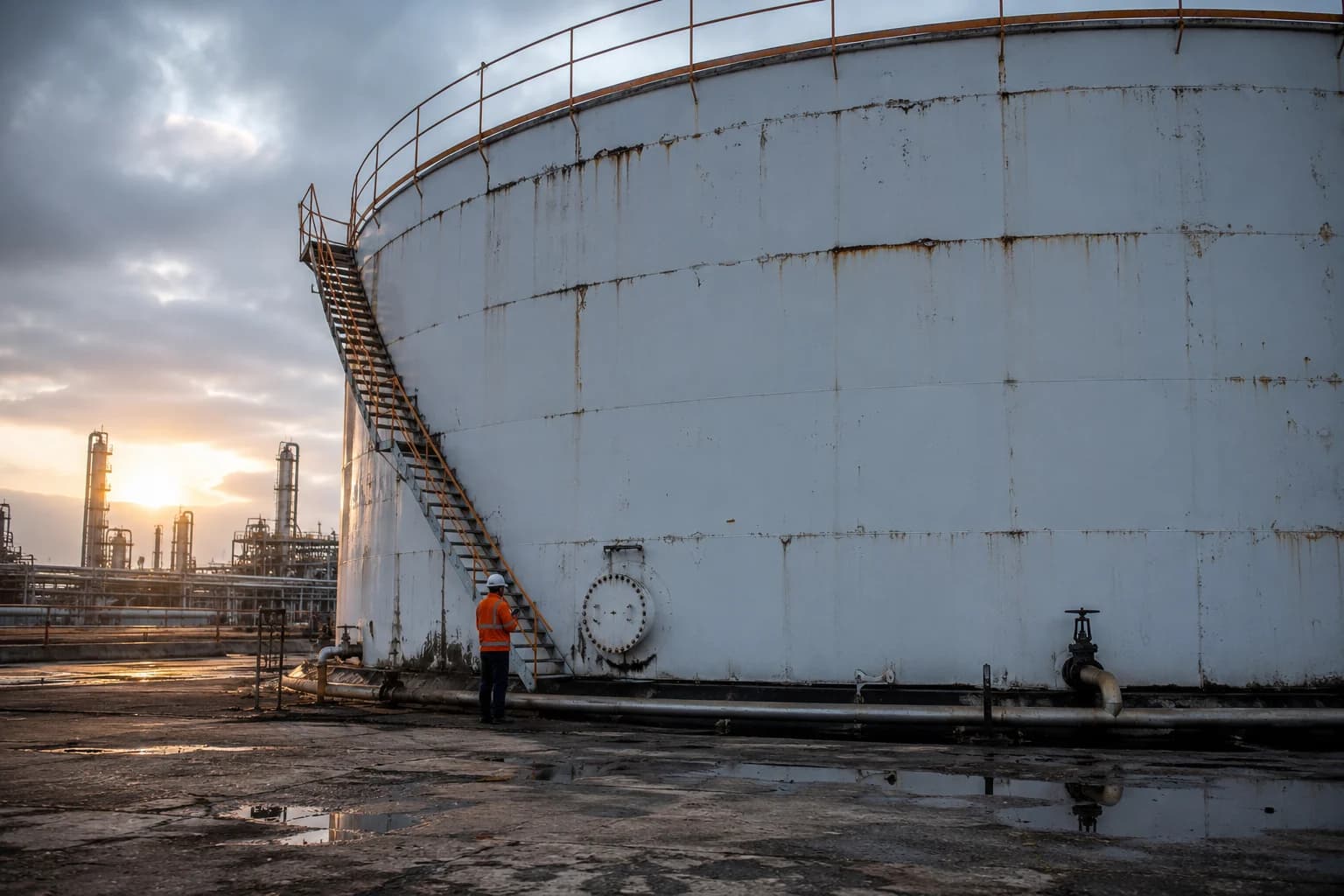
In-service inspection
External and internal inspection of vessels, tanks and piping in operation, to API 510, API 570 and API 653 methodology.
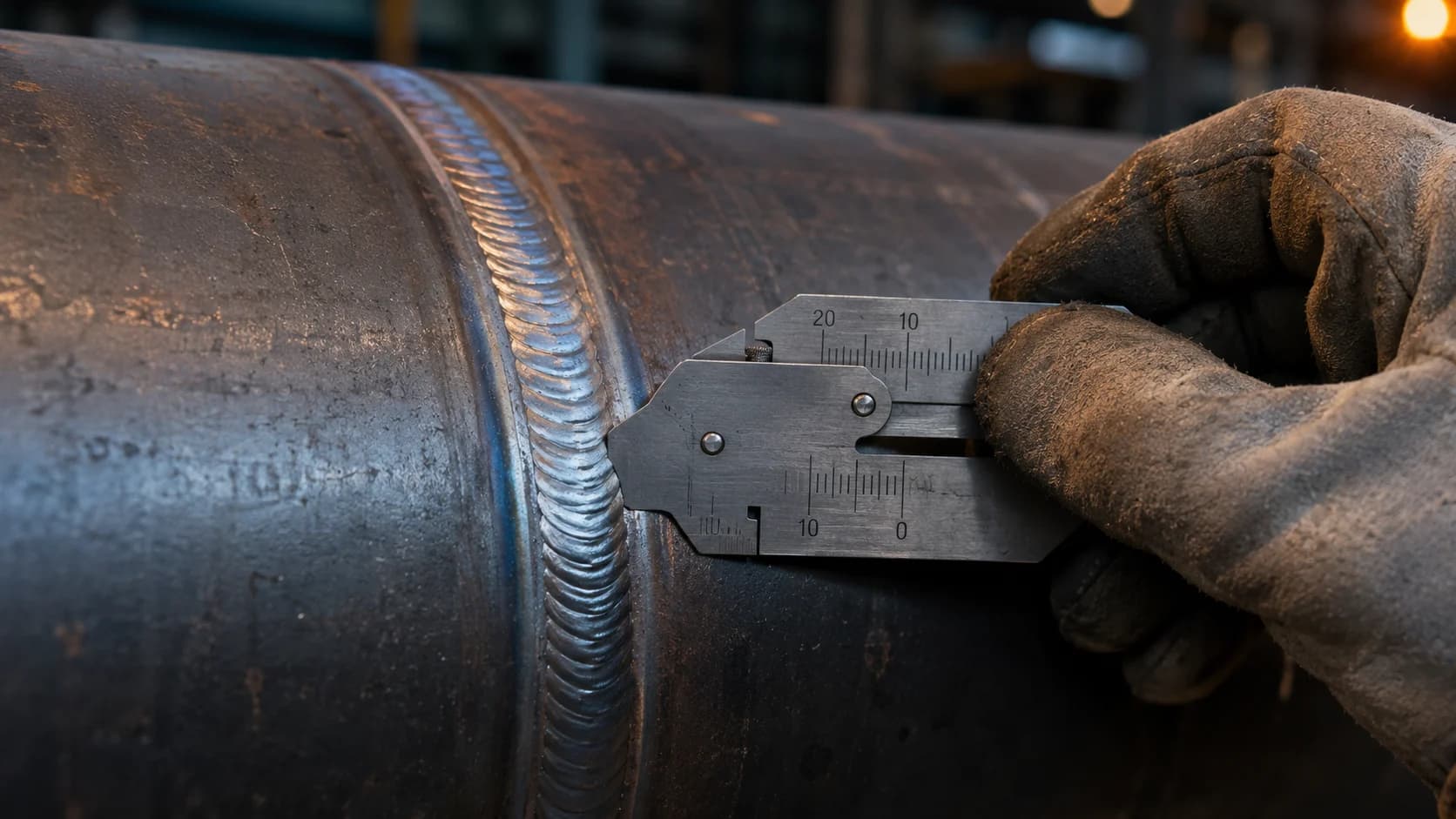
Welding inspection
Visual and dimensional weld inspection, procedure and welder qualification review, and NDT oversight by CSWIP-certified inspectors.
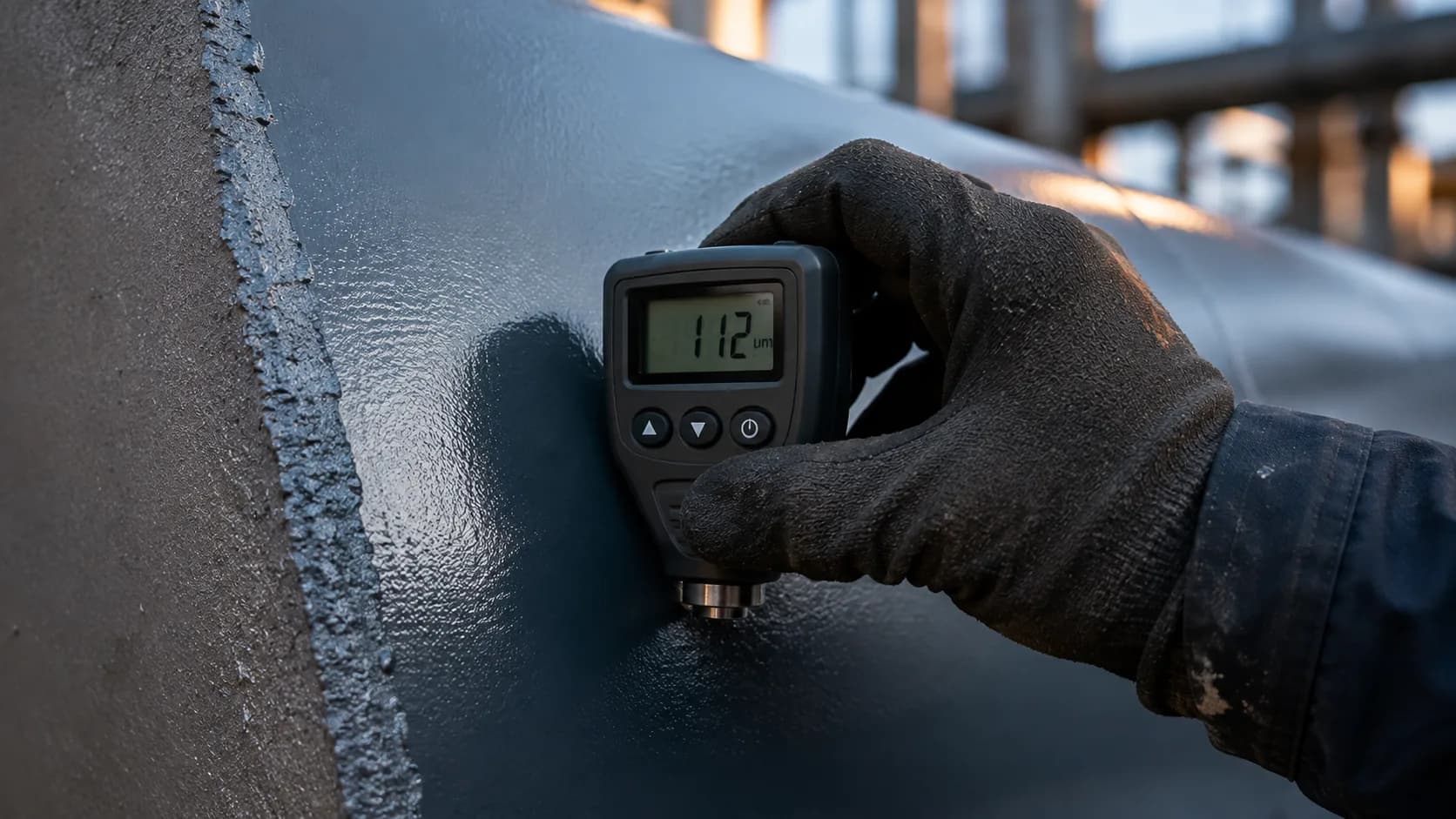
Coating & painting inspection
Surface preparation, ambient condition monitoring, dry film thickness and holiday detection by AMPP CIP-certified inspectors.

NDT surveillance
Independent oversight of UT, RT, MPI, PT and phased array, including technique review, technician certification and result interpretation.

Turnaround & shutdown support
Surge inspection resource for planned turnarounds, working to your scope and reporting into your integrity team.
Standards
Codes and standards we inspect to
Your specification governs. Where it is silent, these are the documents we default to and will say so in the report.
| Standard | Covers | Where it applies in our scope |
|---|---|---|
| ASME VIII Div 1/2 | Pressure vessel construction | Fabrication surveillance, hydrotest witnessing and nameplate verification on new vessels |
| ASME B31.3 | Process piping | Piping fabrication and installation inspection, examination category and pressure test verification |
| ASME IX | Welding qualification | WPS, PQR and welder performance qualification review before production welding begins |
| API 510 | Pressure vessel inspection | In-service external and internal inspection, thickness monitoring, inspection interval setting |
| API 570 | Piping inspection | In-service piping circuit inspection, CML selection and remaining life calculation |
| API 653 | Storage tank inspection | Aboveground tank external, internal and out-of-service inspection and settlement survey |
| API 577 | Welding inspection & metallurgy | Weld quality assessment and metallurgical judgement on fabrication and repair welds |
| API 571 | Damage mechanisms | Identification of in-service damage during field inspection, feeding the integrity assessment |
| AMPP / NACE | Coatings & corrosion control | Surface preparation, application and coating inspection to the specified AMPP standards |
| NACE MR0175 / ISO 15156 | Sour service materials | Material and hardness verification on equipment destined for H₂S-bearing service |
How it works
How an inspection assignment runs
Four steps from enquiry to release. Nothing here is unusual — it is simply written down, which is not always the case.
Scope and quote
You send the purchase order specification, drawings and the ITP if one exists. We confirm the hold and witness points, the man-days required and the inspector's certification level, then quote against that.
Inspector assignment
We assign a named inspector from our network whose certifications match the equipment, and send you their CV and certificates before mobilisation. You approve the individual, not just the company.
Attendance and reporting
The inspector attends each agreed point, issues a report after every visit and raises non-conformances as they arise — not in a summary at the end, when the equipment is already painted.
Release and dossier
Once outstanding NCRs are closed, we review the manufacturing record book and issue the release note. You receive the full documentation pack, structured for your own audit trail.

Where we work
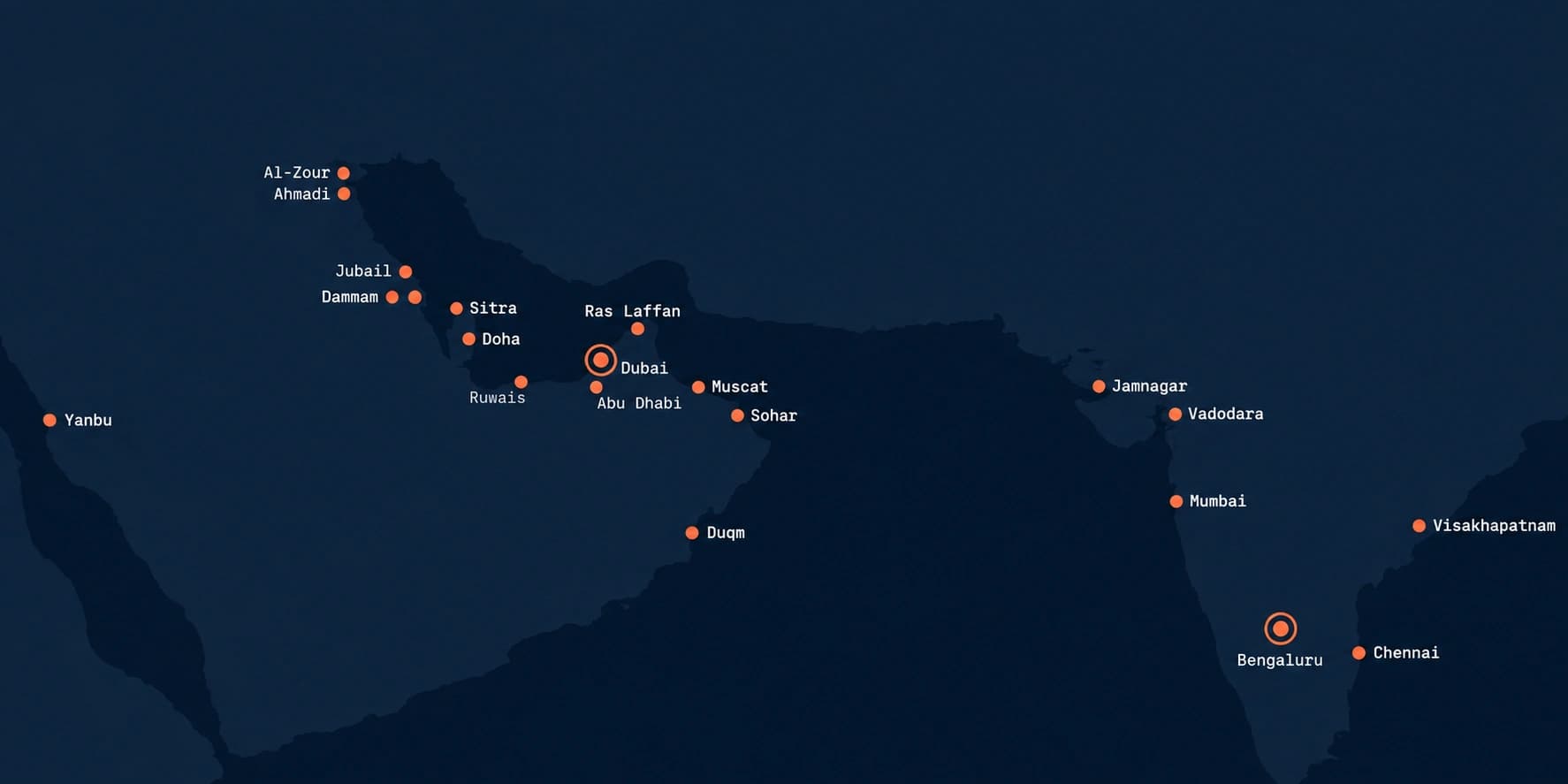
Inspection coverage across the Gulf and India
Inspectors mobilise from Dubai and Bengaluru to vendor works and operating sites across the following markets.
United Arab Emirates
Dubai · Abu Dhabi · Ruwais · Jebel Ali · Sharjah · Fujairah
Our home market. Vendor inspection at Jebel Ali and Hamriyah fabrication yards, and field inspection support across the Ruwais refining and petrochemical complex.
Saudi Arabia
Dammam · Al Khobar · Jubail · Yanbu · Ras Tanura
Source inspection at Eastern Province vendor works and inspection support across the Jubail and Yanbu industrial cities, including Aramco vendor documentation requirements.
Qatar
Doha · Ras Laffan · Mesaieed · Dukhan
LNG and petrochemical inspection at Ras Laffan and Mesaieed, with particular attention to sour service material verification under NACE MR0175.
Oman
Muscat · Sohar · Duqm · Salalah
Inspection support to the Sohar and Duqm refinery and petrochemical complexes, and to upstream operators, with In-Country Value considerations built into how we resource assignments.
Kuwait & Bahrain
Ahmadi · Mina Abdullah · Al-Zour · Sitra · Hidd
Field and vendor inspection across KNPC and BAPCO assets, including refinery modernisation and clean fuels scope.
India
Mumbai · Bengaluru · Jamnagar · Vadodara · Visakhapatnam · Chennai
Source inspection at Indian manufacturers supplying Gulf projects — a common and cost-effective arrangement — plus in-service inspection for domestic operators.
Those are the markets we work in most often. We mobilise elsewhere on request — including Malaysia, Iraq, Egypt and West Africa — so if your works or your plant sits outside this list, send the location with the enquiry and we will confirm feasibility before quoting.
Examples
What a typical assignment looks like
Anonymised by client request. Sector, scope and outcome are as delivered.
Pressure vessel package, Indian works, GCC end user
Vendor inspection · UAE
Six ASME VIII Div 1 vessels fabricated in western India for a UAE operator. Full source inspection from plate receipt through PWHT and hydrotest, with ten hold points per vessel. Outcome: two material substitutions and one PWHT chart discrepancy identified and corrected before shipment.
API 510 external inspection campaign
In-service · Gulf refinery
Forty vessels inspected externally over a six-week campaign, with thickness monitoring location readings, CUI-susceptible area assessment and inspection interval recommendations. Outcome: findings register and revised intervals issued, feeding the client risk-based inspection review.
Shutdown inspection resource
Turnaround · Petrochemical
Four inspectors mobilised for a planned turnaround, working to the client's scope on column internals, exchanger bundles and piping circuits under the client's integrity lead. Outcome: scope completed within the shutdown window.
FAQs
Questions buyers ask before appointing an inspector
Third-party inspection is verification carried out by an organisation independent of both the buyer and the vendor, confirming that equipment has been manufactured, tested and documented in line with the purchase specification and the applicable code.
It is usually required in one of three situations: the purchase order specifies it, the equipment is critical enough that failure carries safety or production consequences, or the vendor is unfamiliar and the buyer has no history on which to rely. Many operators in the Gulf mandate it for all pressure-retaining equipment as standard.
Surveillance is generally continuous or periodic monitoring of a vendor's overall process and progress, often with an expediting element. Third-party inspection is attendance at defined hold and witness points to verify specific activities against the ITP, ending in a release decision.
In practice the two are frequently combined in one assignment, and we are happy to quote them together — but they are priced differently because surveillance is time-based and inspection is event-based.
Not as part of a standard third-party inspection scope. NDT is executed by the vendor's technicians or by a specialist NDT contractor; our role is to review the technique, verify the technicians' certification, witness the examination and interpret the results independently.
Keeping execution and verification separate is the point of third-party inspection. Where you need NDT execution as well, we will arrange it through a certified subcontractor and say clearly in the scope who is doing what.
We match the certification to the equipment rather than sending whoever is available. A source inspection on fabricated fixed equipment goes to an inspector holding API SIFE or the relevant vessel and piping certifications; rotating equipment goes to API SIRE; coating scope goes to an AMPP CIP inspector; weld-critical scope goes to CSWIP.
Before anyone mobilises you receive the named inspector's CV and current certificates, and you approve the individual — not just the company. We verify certificate currency directly rather than taking a scan at face value.
Where a scope calls for a certification we cannot staff to the standard you need, we say so at the enquiry stage and either arrange it openly through a specialist or decline the work.
Vendor inspection is priced per man-day plus travel and mobilisation, and the man-day rate depends on the certification level the equipment requires. In-service and turnaround work is normally quoted as a campaign against an agreed scope.
The variable that moves the number most is the number of hold points, not the size of the equipment — a small valve package with eight hold points takes more inspector days than a large vessel with three. Send the ITP and we can quote accurately rather than approximately.
Within the UAE and India, usually within a few working days of scope approval. For other Gulf markets it depends on visa and site access requirements, which vary by country and by operator — Saudi and Kuwait site access in particular needs lead time.
Tell us the location and the required attendance date in the enquiry and we will confirm feasibility before quoting, rather than accepting the job and discovering the constraint later.
No, and it is worth being precise about the distinction. Statutory certification and notified body functions sit with accredited certifying authorities. We provide independent inspection on behalf of the purchaser, with certified inspectors and documented reporting.
If your scope requires a notified body or a statutory certificate, you will need that authority in addition to third-party inspection, and we will tell you so at the enquiry stage.

Send us the specification and the ITP
We'll come back with the hold points we'd attend, the inspector we'd assign and the man-days it takes. If the scope doesn't need us, we'll tell you that too.