
Asset Integrity Management
Decide What to Repair, What to Watch, and What Can Safely Keep Running
Risk-based inspection, damage mechanism review, corrosion management and fitness-for-service assessment — turning inspection data into decisions you can defend to an auditor, an insurer or a regulator.
What we do
EIM provides asset integrity management services to refinery, petrochemical and upstream operators — establishing what is degrading, how fast, and what to do about it before it becomes a shutdown.
Inspection tells you the wall is thinner than it was. Integrity management tells you whether that matters. The gap between those two statements is where most operators lose money — either by replacing equipment that had years of life left, or by running equipment that did not.
Our work starts from the damage mechanism rather than the reading. A 2mm loss on a hot line in high-temperature sulphidic service means something entirely different from the same loss on a cold line under insulation, and the inspection response, the interval and the monitoring strategy differ accordingly. Getting that judgement right is what separates an integrity programme from a spreadsheet of thickness readings.
Everything we produce is written to be defended. Risk-based inspection studies record the reasoning behind every interval, not just the interval. Fitness-for-service assessments show the calculation and the assumptions. When your regulator, insurer or corporate integrity function asks why a vessel is still in service, the answer is in the report rather than in someone’s memory.
Where the assessment needs field data we do not yet have, our inspection services team collects it to the same standard, so the data and the decision come from one place.
What we do
Four kinds of integrity work
Bought individually or as a programme. Most operators start with one circuit or one unit rather than the whole plant.

Risk-based inspection
We build RBI programmes to API 580 and 581, shifting inspection from calendar-based to condition-based intervals. We do the data extraction, probability and consequence modeling, and produce the final inspection plans.
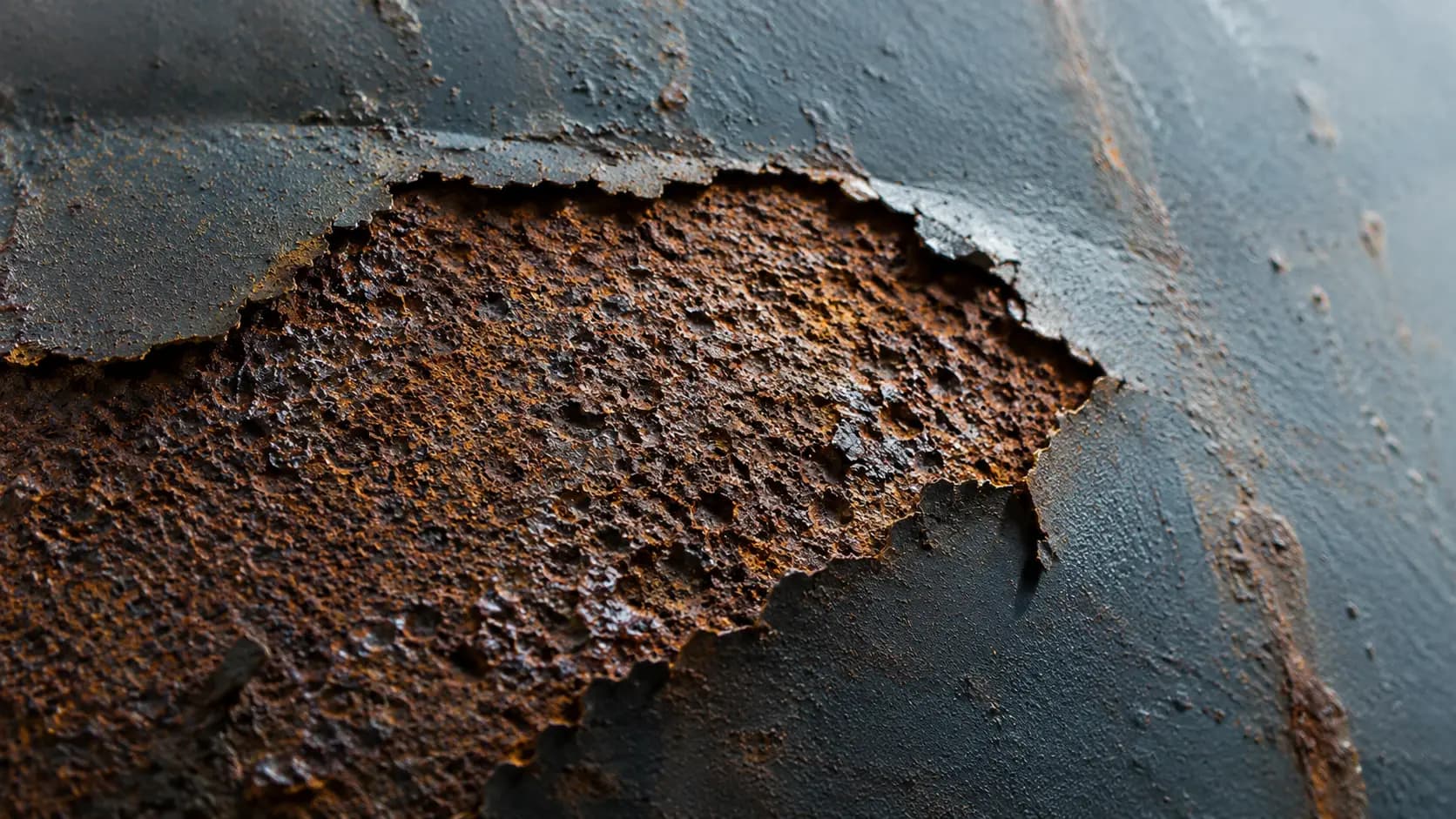
Damage mechanism & corrosion review
We identify active and potential degradation mechanisms across your circuits to API 571. That dictates what NDT methods you actually need, rather than just taking thickness readings and hoping they catch the problem.
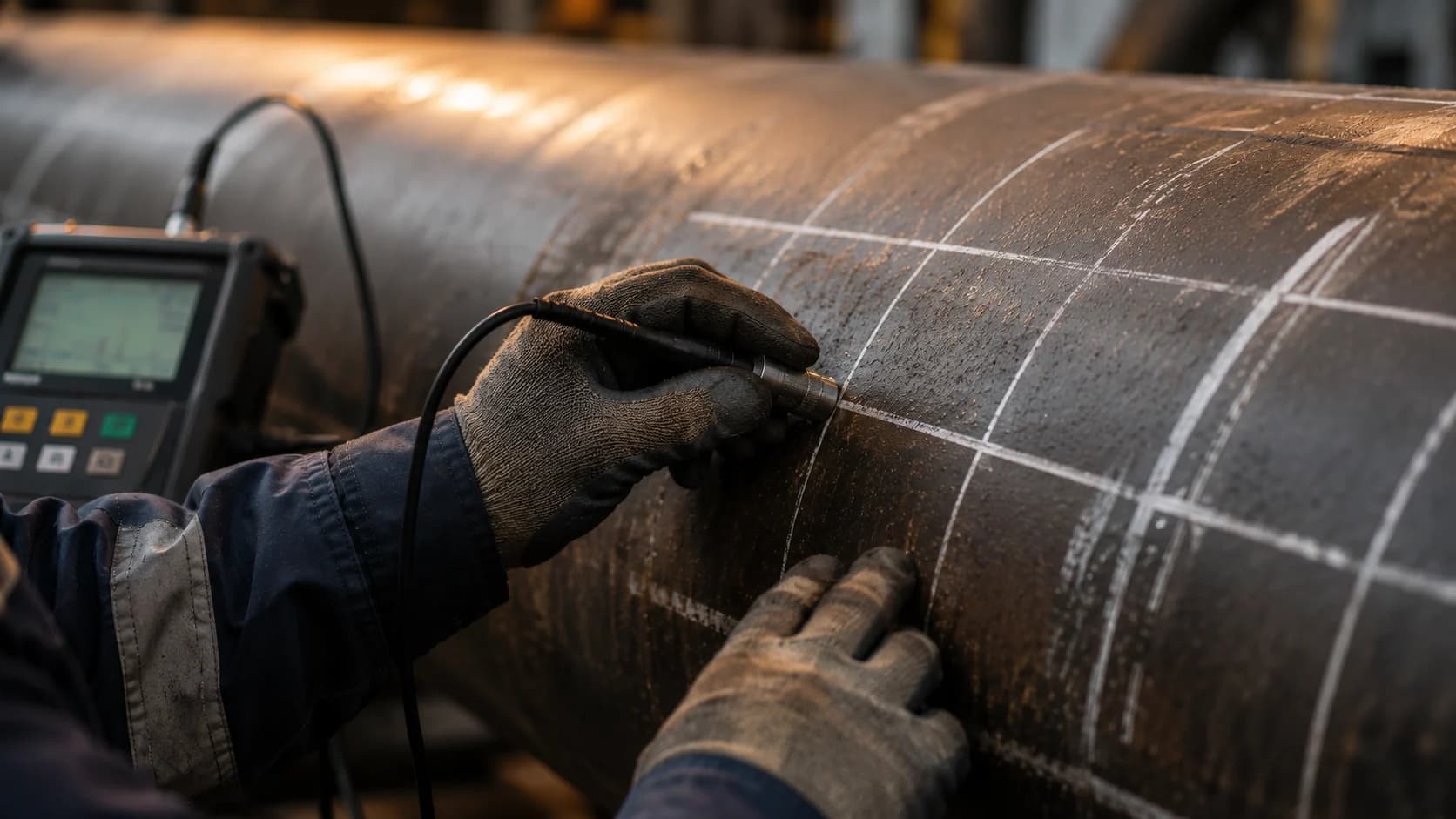
Fitness-for-service assessment
When inspection finds a defect, we run the Level 1 and 2 assessments to API 579 to prove whether it is safe to keep running, or calculate the remaining life and de-rating pressure if it is not.

Monitoring & integrity programmes
Condition monitoring location selection and rationalisation, integrity operating window definition to API 584, corrosion monitoring programme design, and inspection data review.
Scope
What's included, and what isn't
Integrity scopes drift more than inspection scopes, so it is worth being explicit at the outset.
Included in a standard scope
- Review of process conditions, materials of construction and existing inspection history
- Corrosion loop development and damage mechanism identification
- Corrosion rate determination from historical thickness data
- Probability and consequence of failure assessment
- Risk ranking and inspection plan with justified intervals
- Fitness-for-service assessment where a finding requires it
- Recommendations on inspection technique and coverage
- Written report with assumptions, calculations and reasoning recorded
- Close-out workshop with your integrity and operations teams
Not included unless agreed separately
- Field inspection to collect missing data — quoted through inspection services
- Level 3 fitness-for-service assessment requiring finite element analysis
- New-build design, code calculations or stress analysis
- Software licensing — we work in your IDMS or RBI platform where you have one
- Laboratory failure analysis and metallurgical testing
- Statutory certification or notified body functions
Where a study reveals that the underlying inspection data is too sparse to support a defensible conclusion, we will say so rather than produce a study built on assumptions.
Standards
Codes and recommended practices we work to
Your corporate integrity standard governs where one exists. These are the documents we default to otherwise.
| Standard | Covers | Where it applies in our scope |
|---|---|---|
| API 580 | Risk-based inspection | RBI methodology, programme structure and the qualitative assessment framework |
| API 581 | Quantitative RBI | Probability and consequence calculation where a quantitative study is justified |
| API 571 | Damage mechanisms | Identifying which mechanisms are credible for each circuit and operating condition |
| API 579-1 / ASME FFS-1 | Fitness-for-service | Level 1 and 2 assessment of metal loss, pitting, blistering and crack-like flaws |
| API 510 / 570 / 653 | In-service inspection | Interval setting, remaining life and the inspection response to a finding |
| API 970 | Corrosion control documents | Structure and content of corrosion control documentation per circuit |
| API 584 | Integrity operating windows | Defining the process limits that keep damage rates predictable |
| NACE MR0175 / ISO 15156 | Sour service materials | Material suitability review for H₂S-bearing service |
| ASME B31.3 / VIII | Piping and vessel construction | Original design basis, allowable stress and minimum thickness determination |
How it works
How an integrity study runs
Data gathering
P&IDs, line lists, materials of construction, process conditions, and whatever inspection history exists. We tell you early if the data will not support the conclusion you need.
Corrosion loops & mechanisms
Circuits grouped by shared process conditions and materials, then the credible damage mechanisms identified for each, with corrosion rates established from history or published data where history is thin.
Risk assessment
Probability and consequence of failure assessed per circuit or item, risk-ranked, and reviewed in a workshop with your process, operations and integrity people rather than produced in isolation.
Plan & report
An inspection plan with technique, coverage and interval for each item, the reasoning recorded alongside it, and a close-out session so your team can defend the output after we leave.

Deliverables
What you actually receive
Documents that stand up on their own, in a format your team can maintain after the study closes.
RBI study report
Per unit or per circuit group
Risk ranking, the assessment basis, assumptions stated explicitly, and the inspection plan that follows from it.
Corrosion loop diagrams & CCD
Marked-up P&IDs
Circuits defined by shared conditions, with credible damage mechanisms and monitoring requirements documented per loop.
Revised inspection plan
Technique, coverage, interval
What to inspect, how, where and when — with the reasoning attached so a future reviewer can see why.
Fitness-for-service report
Where a finding requires it
Assessment level, calculations, remaining life, and a clear repair, monitor, re-rate or replace recommendation.
CML register & rationalisation
Monitoring locations
Condition monitoring locations selected against damage mechanism rather than convenience, with redundant points removed.
Integrity operating windows
To API 584
Process limits that keep damage rates within the assumptions the inspection plan was built on, with alarm and action levels.
Coverage
Where we work
Integrity studies run from our Dubai and Bengaluru offices, with site workshops held at your facility.
Gulf
UAE · Saudi Arabia · Qatar · Oman · Kuwait · Bahrain
Refining and petrochemical complexes at Ruwais, Jubail, Yanbu, Ras Laffan, Sohar, Duqm, Al-Zour and the surrounding industrial areas.
India
Jamnagar · Vadodara · Mumbai · Visakhapatnam · Chennai
Integrity support for domestic refining and petrochemical operators, run from our Bengaluru office.
Elsewhere
On request
Much of an integrity study is desk-based, so we take work outside these markets more readily than field inspection. Send the scope and we will confirm.
FAQs
Questions integrity engineers ask first
Inspection measures condition. Integrity management decides what that condition means and what to do about it. An inspector reports 8.2mm where the drawing said 11mm; integrity management establishes the damage mechanism causing it, the rate, the remaining life against minimum required thickness, and whether the response is a repair, a shorter interval, a process change or nothing at all.
You can buy inspection without integrity management, and many operators do. The result is usually a large volume of accurate data that nobody has the framework to act on.
It depends on what you are trying to justify. A qualitative study to API 580 is usually sufficient to prioritise inspection effort and set sensible intervals, and it can be completed far faster. A quantitative study to API 581 is worth the effort where you need to defend interval extension on high-consequence equipment.
Quantitative RBI also demands considerably better input data. Where inspection history is thin, a quantitative study produces precise-looking numbers built on assumptions, which is worse than an honest qualitative ranking. We will tell you which your data actually supports.
At minimum: P&IDs, line lists with materials of construction, normal and upset process conditions, equipment design data, and whatever inspection history exists — thickness readings with dates and locations are the most valuable single input.
Gaps are normal and not a blocker. Where corrosion rates cannot be established from history we use published rates for the mechanism and material, state that clearly as an assumption, and flag the circuits where obtaining real data should be the first inspection priority.
Yes, and we prefer to. A study delivered into your own inspection data management system stays maintainable by your team; one delivered as a standalone report tends to be out of date within two years. Tell us what you run and we will work in it, subject to your licensing and access arrangements.
Where you have no system, we deliver in structured spreadsheets designed to be imported later rather than in prose documents.
Yes — that is largely the point of API 579. A Level 1 or Level 2 assessment works from measured flaw dimensions, material properties and operating conditions, so provided the flaw has been characterised adequately, the assessment does not itself require shutdown.
What it may require is better characterisation than a routine thickness reading provides. If the existing data is not sufficient to define the flaw geometry, we will specify the inspection needed before the assessment can be relied on.
A single-unit qualitative RBI is typically a matter of weeks; a plant-wide quantitative programme runs to months. The variable that dominates is data availability, not the number of circuits — assembling and validating inspection history routinely takes longer than the assessment itself.
Send an equipment count and a description of what data you hold, and we will give you a realistic duration rather than an optimistic one.

Start with one unit, not the whole plant
Send an equipment list and a description of the inspection history you hold. We will tell you what a study on that scope would produce, and whether your data supports it.