API SIRE Source Inspector Rotating EquipmentExam Guide & Preparation
API SIRE Source Inspector Rotating Equipment certifies your competency in supplier quality surveillance for rotating equipment, examining fabricated and manufactured pumps, gears, compressors, turbines, and associated appurtenances at a supplier's facility, and confirming the supplier's quality management system is being effectively utilized before that equipment ships.
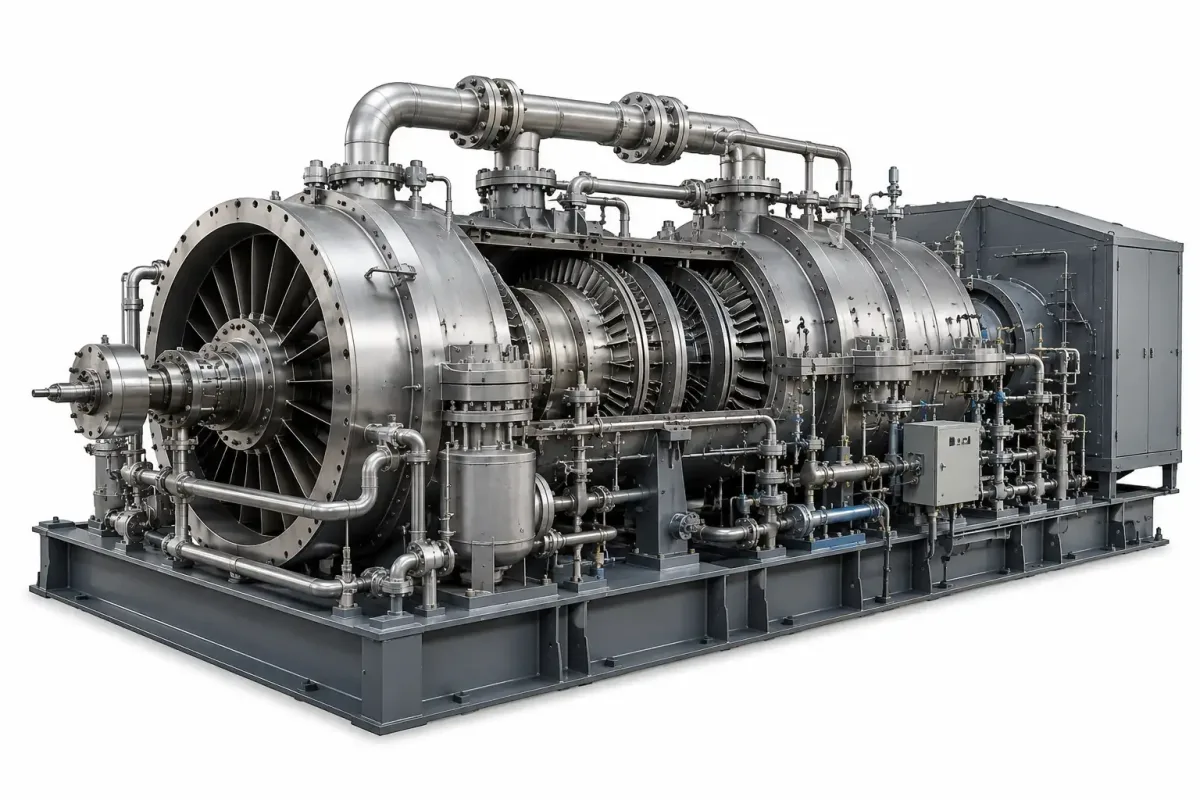
Question Bank + Study Notes
API SIRE Source Inspector Rotating Equipment certifies your competency in supplier quality surveillance for rotating equipment, examining fabricated and manufactured pumps, gears, compressors, turbines, and associated appurtenances at a supplier's facility, and confirming the supplier's quality management system is being effectively utilized before that equipment ships.
SIRE is the rotating-equipment counterpart to API SIFE (fixed equipment), part of API's broader Source Inspector suite alongside SIEE (electrical equipment). Where SIFE covers vessels, piping, and structural fabrications, SIRE focuses specifically on machinery with moving parts, pump inspection per API 610, compressor inspection per API 617 and 618, turbine and gear inspection, mechanical run testing, and the documentation that drives shop-witness work.
The exam runs 110 questions across 3.25 hours, closed-book, with only 100 of the 110 questions scored, the remaining 10 are unscored pretest items. No reference material is permitted, matching the closed-book format used across the entire Source Inspector suite.
Whether you're looking for a structured API SIRE course, self-paced API SIRE online training, or simply a focused way to study for API SIRE certification around a working schedule, EIM's API SIRE training platform is built to fit all three.
API SIRE vs API SIFE
API SIRE and API SIFE share the same purpose, supplier quality surveillance before equipment ships, the same exam format, and the same open eligibility structure. The difference is entirely scope: SIFE covers pressure-containing and structural equipment, vessels, piping, valves, pressure relief devices, while SIRE covers rotating equipment with moving parts, pumps, compressors, turbines, and gears.
That scope difference matters more than it might first appear, since rotating equipment introduces inspection concerns SIFE doesn't touch at all: mechanical run testing, vibration and alignment verification, bearing and seal inspection, and performance testing against design curves. A candidate strong in fixed-equipment source inspection can't simply transfer that knowledge to SIRE without separately studying rotating-equipment-specific content.
Qualification & Prerequisites
What the Exam Actually Tests
Five domains, weighted by question share. This is the map the question bank is built directly against.
Source inspector responsibilities, supplier quality management system evaluation
API 610 pump configurations, materials, casing hydrostatic testing, mechanical seals, bearings
Compressor inspection per API 617 and 618, turbine and gear inspection
Performance and NPSH testing, vibration and alignment verification, run-test data interpretation
NDE method selection for rotating equipment, inspection and test plan (ITP) and data-sheet review
| Domain | Covers | |
|---|---|---|
| 01 | Source Inspector Roles & Supplier Quality Surveillance | Source inspector responsibilities, supplier quality management system evaluation |
| 02 | Pump Inspection (API 610) | API 610 pump configurations, materials, casing hydrostatic testing, mechanical seals, bearings |
| 03 | Compressor & Turbine Inspection (API 617/618) | Compressor inspection per API 617 and 618, turbine and gear inspection |
| 04 | Mechanical Run Testing & Performance Verification | Performance and NPSH testing, vibration and alignment verification, run-test data interpretation |
| 05 | NDE, Documentation & ITP Review | NDE method selection for rotating equipment, inspection and test plan (ITP) and data-sheet review |
01. Source Inspector Roles & Supplier Quality Surveillance
02. Pump Inspection (API 610)
03. Compressor & Turbine Inspection (API 617/618)
04. Mechanical Run Testing & Performance Verification
05. NDE, Documentation & ITP Review
How to Register and What to Expect on Exam Day
Candidates apply directly through API's Individual Certification Programs (ICP) portal, not through EIM or any third-party training provider. This exam can be scheduled either at in-person Prometric testing centers or through remote proctoring, giving candidates more scheduling flexibility than exams limited to in-person testing only.
Check API's current ICP fee schedule for the official exam fee, which is separate from EIM's API SIRE course, question bank, and study material pricing. Certification is valid for three years, and recertification applications can be submitted up to 90 days before expiration, with employment verification not currently required for recertification.
How to Prepare for API SIRE Source Inspector Rotating Equipment
Self-paced by default. Add live instruction if you want structured guidance.
API SIRE Source Inspector Rotating Equipment Question Bank
900 practice questions across 4 modules, mapped to every BOK domain. Study at your own pace, no fixed schedule required.
Add Live Instructor-Led Training
5-week structured program. Runs on a fixed cohort schedule, check current availability.
Bundle: Question Bank + Live Course
Best for candidates who want structured teaching plus unlimited self-paced practice
Sample Practice Questions
During a pump's mechanical run test, the source inspector observes vibration readings that exceed the acceptance criteria specified in the applicable data sheet, even though the pump otherwise passed casing hydrostatic testing and dimensional inspection. What is the most appropriate inspector action?
A centrifugal pump's performance test shows it meeting its rated head and flow, but NPSH (net positive suction head) testing shows the pump requires more NPSH than specified. What does this indicate?
What's Included in the Self-Prep Package
API SIRE Question Bank
Scenario-based source inspection questions mapped to the current API SIRE Body of Knowledge, with a worked explanation for every answer.
API SIRE Study Notes
Downloadable study material covering pump, compressor, turbine, and gear inspection, plus run testing.
API SIRE Mock Test
Full-length practice exam mirroring the real 110-question, 3.25-hour closed-book format.
Related Certifications
Common Questions
What is the API SIRE certification?
How many questions are on the API SIRE exam?
Do I need prior experience to take the API SIRE exam?
What is the difference between API SIRE and API SIFE?
How much does API SIRE certification cost?
Can I take the API SIRE exam remotely?
How long is API SIRE certification valid?
What does EIM's API SIRE training include?
Why API SIRE Source Inspector Rotating Equipment Matters for Asset Integrity Careers
Rotating equipment source inspection differs from static equipment inspection in a way that shows up repeatedly on the exam: a pump or compressor doesn't just need to be built correctly, it needs to actually perform correctly once assembled, which is why mechanical run testing and performance verification against design curves sit at the center of SIRE's body of knowledge in a way that has no real equivalent on the SIFE exam. Alignment, vibration signatures, and bearing condition during a run test can reveal problems that visual and dimensional inspection alone would miss entirely.
Because the exam is entirely closed-book, effective API SIRE exam preparation means building genuine recall of rotating-equipment-specific inspection checkpoints and acceptance criteria, not general fabrication knowledge borrowed from static equipment. EIM's API SIRE question bank is built around realistic shop-floor and run-test scenarios specific to pumps, compressors, turbines, and gears, the actual working context the exam is designed to test.
- ✓900 practice questions
- ✓4 structured modules
- ✓1 Year
- ✓Mobile-friendly platform
Confused about which certification is right for you? Talk to our experts.