Types of Gland Packing and Where Each One Is Used
Graphite, PTFE, aramid, carbon fibre and other gland packing types explained: where each is used, how to choose it and how to repack a stuffing box.
By Harish Haseeb24 Oct 20267 min read
Walk past any old pump house and you will see it: a slow drip from the stuffing box, a puddle under the baseplate, and somewhere nearby a coil of braided packing waiting for the next repack. Gland packing is one of the oldest sealing methods in industry and still one of the most common, on pumps, valves, mixers and agitators.
It is also easy to get wrong. The wrong material burns, glazes or attacks the shaft sleeve, and the right material installed badly leaks just as much. This article explains how packing works, the main types and where each belongs, and how to install it so it seals and lasts.
How gland packing works
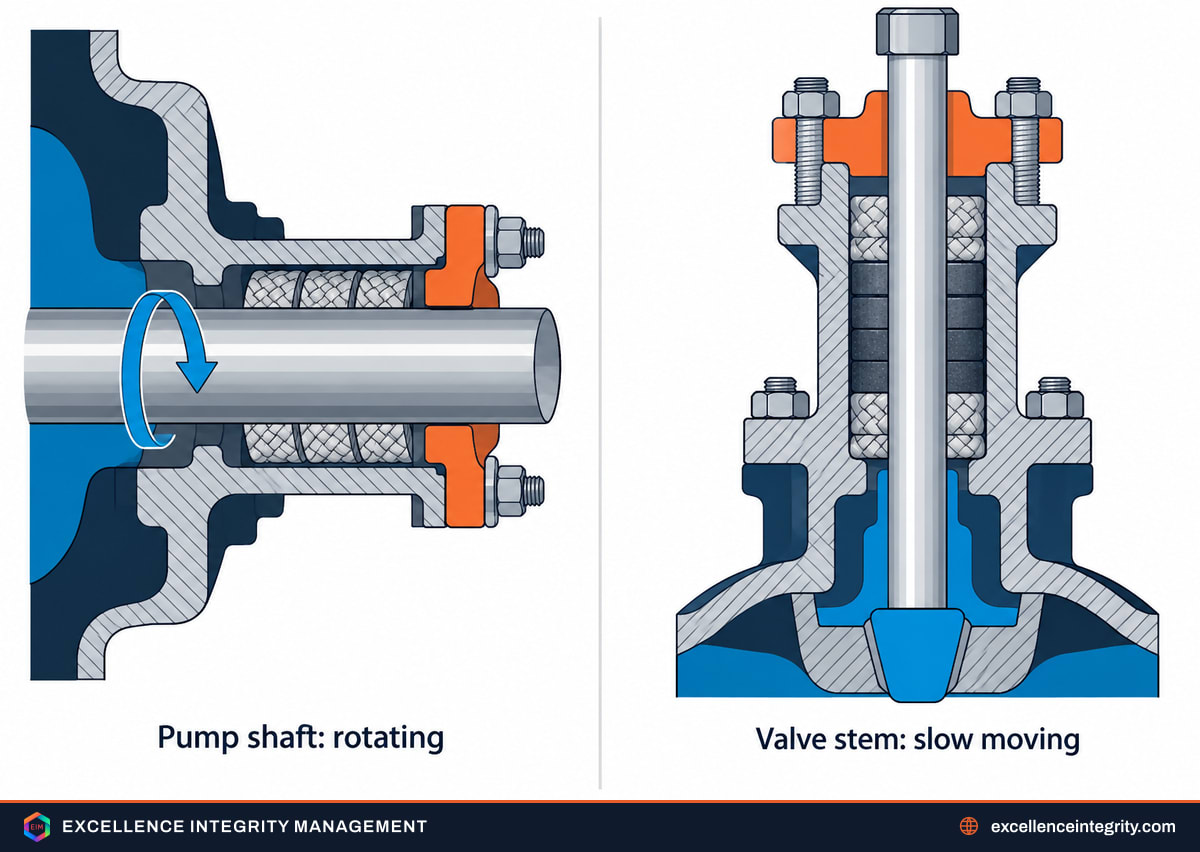
Packing is a set of rings fitted into the stuffing box, the bore around a pump shaft or valve stem where it leaves the casing. A gland follower bolted on the outside squeezes the rings along the shaft. Squeezed lengthwise, the rings expand sideways, pressing against the shaft and the bore, and that contact is what seals.
On a rotating pump shaft, packing is not meant to be bone dry. A small, steady leak lubricates and cools the contact between packing and shaft. Tighten the gland until the leak stops and the packing heats up, hardens, and scores the shaft sleeve, and within days it leaks far more than it did. On a valve stem, which moves slowly or not at all, the aim is a tight seal with no visible leak, and for hazardous service, low emissions.
Many stuffing boxes also have a lantern ring: a spacer with holes, fed through a port with clean flush water or grease. It cools the packing and keeps abrasive particles out of the rings.
"Gland packing" is the name for the whole family, not one type. The types below differ in what the rings are made of, and that decides where each one works.

The main types of packing by material
| Packing | What it is good at | Typical use |
|---|---|---|
| Flexible graphite | Heat, steam, good thermal conductivity, low friction | Hot water and steam valves, boiler feed and hot process pumps |
| PTFE | Almost every chemical, clean and low friction | Chemical pumps and valves, food and pharmaceutical service |
| Expanded PTFE (ePTFE) | Chemical resistance with more flexibility and resilience | Chemical processing valves and pumps |
| Aramid | Very hard-wearing fibre that resists abrasion | Slurry pumps, pulp and paper, water with solids |
| Carbon fibre | Strength, heat and low friction together | Higher-speed pumps, mixers and agitators |
| Ceramic and fibreglass | High temperature, mostly static sealing | Furnace, oven and boiler door seals, hot flanges, insulation |
| Metallic (foil or wire-reinforced) | Holds shape under high pressure and temperature | Demanding valve stems where the specification calls for it |
Two terms often listed as "types" are really treatments. Lubricated and impregnated packing are any of the braids above, soaked or coated with a lubricant, PTFE dispersion or graphite. The treatment reduces friction during running-in and fills the gaps in the braid so fluid cannot wick through it. Most packing you buy is impregnated in some way.
Rubber "packing" is different again. Moulded elastomer rings, such as O-rings, U-cups and V-ring sets, seal by elastic squeeze rather than compression of a braid. They suit hydraulic cylinders and some low-pressure static joints, but they are not a substitute for braided packing in a pump stuffing box.
Choosing packing: the questions to answer first
The datasheet for any packing gives limits. Check your duty against each one, not just the one you think matters:
- Fluid: chemical compatibility with every part of the packing, including the impregnation and any lubricant.
- Temperature: at the packing itself, which can be much hotter than the fluid if the gland runs dry.
- Pressure in the stuffing box, not the pump discharge pressure.
- Shaft surface speed, which combines shaft size and rpm. A packing fine at 1,500 rpm on a small shaft may glaze on a larger, faster one.
- Solids: abrasive slurries need hard-wearing fibres and usually a clean flush through the lantern ring.
- Motion: rotating, reciprocating or a slow-moving valve stem each need a different balance of softness and strength.
A useful rule: pick the packing for the worst case the equipment actually sees, such as start-up with no flush, a hot wash-out, or a dry run, not just normal running.
Packing on pumps compared with valves
The same word covers two quite different jobs. On a centrifugal pump the shaft spins hundreds or thousands of times a minute, so the packing must tolerate continuous rubbing, and some leakage is part of the design. Many plants have moved critical and hazardous pumps to mechanical seals for this reason, keeping packing for water, slurry and utility services where a small leak is acceptable and easy maintenance matters.
On a valve, the stem moves only when the valve is operated, so wear is lower but the seal must hold for long periods without attention. In hydrocarbon and toxic service, valve packing is also judged on fugitive emissions. API 622 sets out how valve packing is type-tested for emissions, and low-emission packing sets usually combine die-formed graphite rings with braided end rings that stop the graphite extruding.
How to repack a stuffing box properly
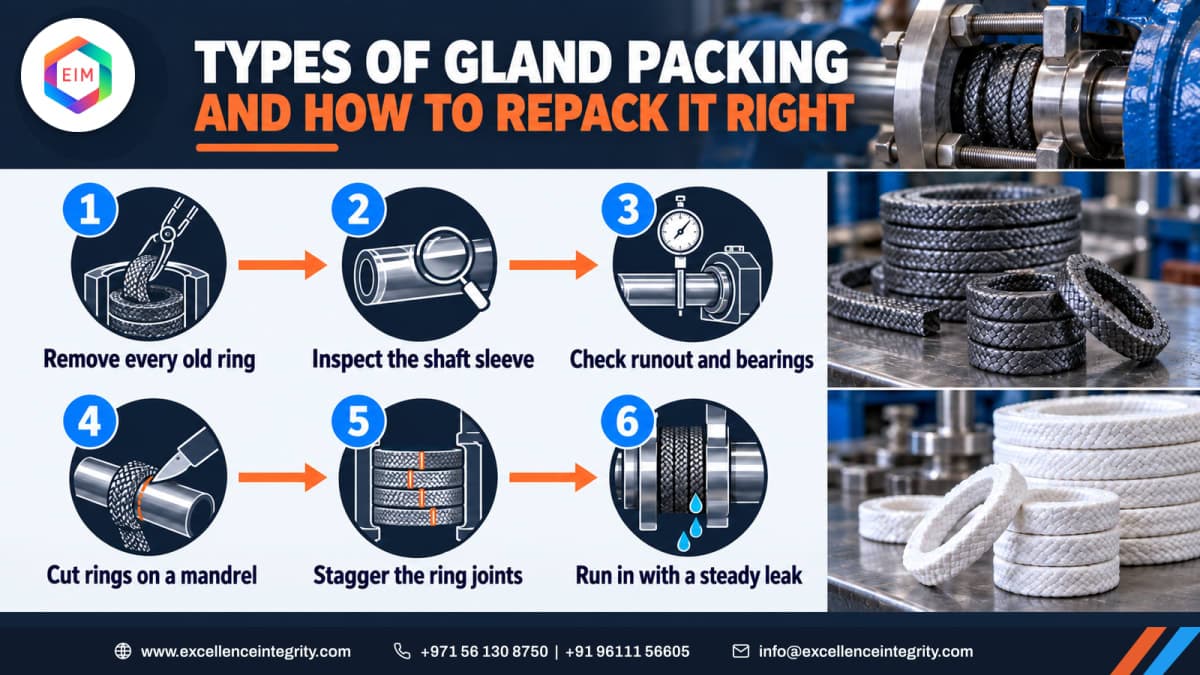
Most packing failures start at installation. A good repack follows the same steps every time:
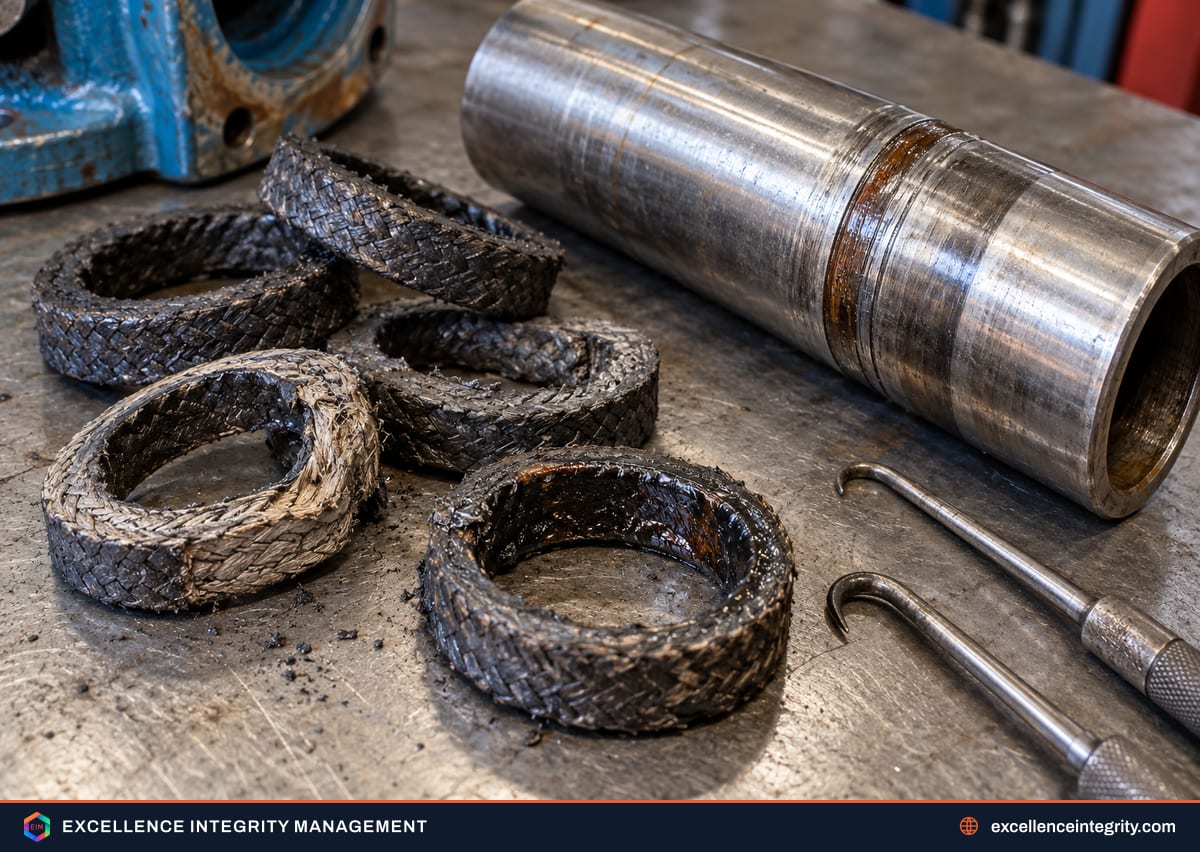
- Remove all the old rings with packing hooks, including the bottom ring and any pieces behind the lantern ring.
- Inspect and clean the stuffing box bore and the shaft sleeve. A grooved or scored sleeve will chew through new packing; replace or repair it.
- Check the shaft: runout and the bearing condition. A shaft that wobbles will pump the packing out.
- Cut the rings on a mandrel the same size as the shaft, with clean square or angled (skive) cuts, so each ring closes with no gap and no overlap.
- Fit one ring at a time, seating each fully before the next, and stagger the joints so no two line up. The lantern ring must end up under the flush port.
- Tighten the gland finger-tight and evenly, then start the pump with a generous leak and take up the gland nuts a little at a time over the first hour, letting the packing run in.
Rushing the last step is the commonest mistake. Clamping a new set hard before start-up is how a new set burns out on its first day.
What failed packing tells you
| What you see | Likely cause |
|---|---|
| Hard, shiny, burnt inner surface | Over-tightened, no leakage or flush, or wrong material for the speed |
| Rings worn thin only on one side | Shaft misalignment or runout |
| Packing extruded past the gland or into the casing | Too much clearance at the gland or the bottom bushing, or pressure too high for the packing |
| Deep groove worn in the shaft sleeve | Abrasive solids in the box, or packing run too tight |
| Swollen, soft or crumbling rings | Chemical attack: the packing or its impregnation is not compatible with the fluid |
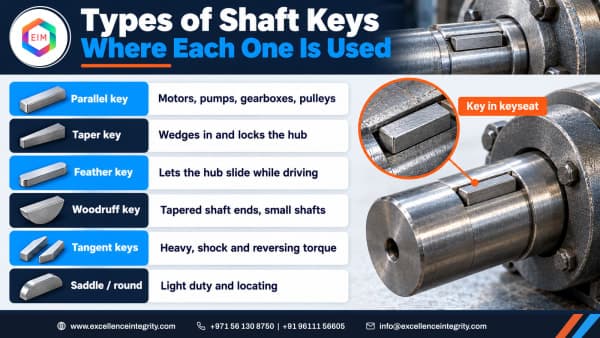
Reading the old rings before throwing them away is the quickest root-cause check you will ever do, and it often tells you whether the problem is the packing or the pump. Misalignment and bearing wear show up in packing first, so it is worth reading alongside pump cavitation and NPSH and the other pump basics in our guide to shaft keys.
Packing, mechanical seals, alignment and bearings are the daily work of a pump maintenance team. Our rotating equipment maintenance and troubleshooting course covers them in practice, and inspectors checking pumps and valves at the vendor's works can look at the API SIRE source inspector certification preparation. Questions about a specific pump or valve? Get in touch.
Enjoyed the question? See more practice for API SIRE Source Inspector Rotating Equipment