API RP 651: Cathodic Protection of Storage Tank Bottoms
API RP 651 explained: soil-side corrosion of tank bottoms, galvanic vs impressed current CP, liners and release barriers, and what inspectors check.
By Asjad Imam11 Nov 20264 min read
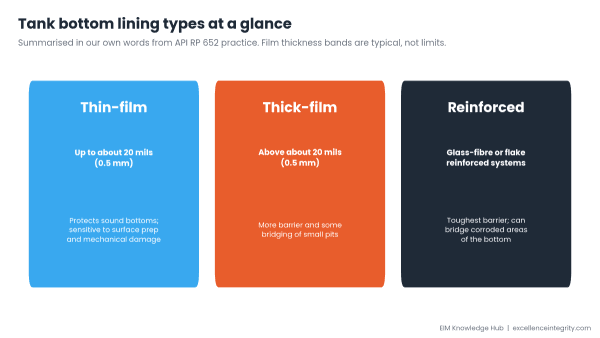
A storage tank floor corrodes from both sides. Linings deal with the product side; the soil side, sitting on sand, oil-sand or concrete, cannot be reached once the tank is built. Cathodic protection (CP) is the main defence, and API RP 651, Cathodic Protection of Aboveground Petroleum Storage Tanks, is the guidance API 653 inspectors are expected to know.
Short answer: Soil-side corrosion happens wherever moisture, oxygen and contaminants reach the underside of the bottom. CP makes the bottom the cathode of a circuit so it stops corroding. Small tanks may use galvanic (sacrificial) anodes; larger tanks usually use impressed current from a rectifier, through groundbeds or anode grids installed under the bottom. Liners under the tank can block CP, so anodes go between the liner and the bottom. API 653 gives an inspection interval credit for soil-side CP.
Why the soil side corrodes
- Moisture from rain, groundwater or poor drainage under the tank edge.
- Contaminants in the pad material, such as chlorides and sulfates.
- Oxygen differences between the edge and the centre of the bottom, which drive corrosion cells.
- Stray currents from nearby CP systems or electrical equipment.
- Microbiological activity in wet, low-oxygen pads; see our MIC guide.
CP options for tank bottoms
| Option | How it works | Typical fit |
|---|---|---|
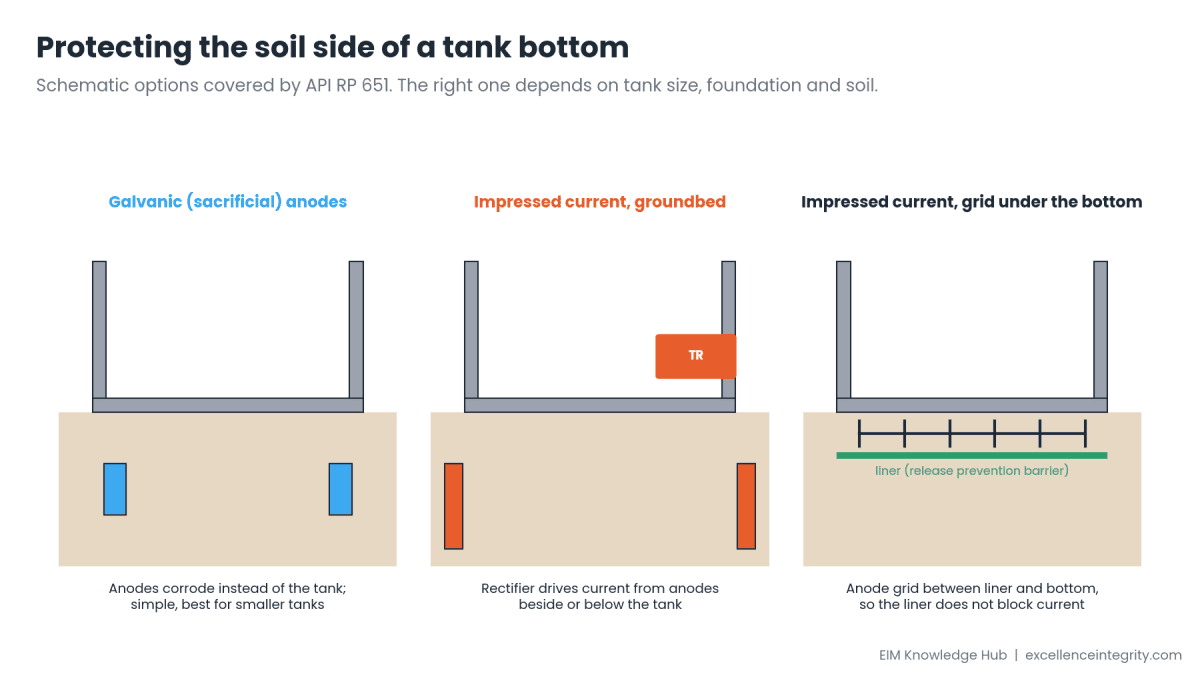
| Galvanic (sacrificial) anodes | Anodes of a more active metal, such as magnesium or zinc, corrode instead of the bottom | Smaller tanks, low current needs, no power available |
| Impressed current, groundbed | A rectifier drives current from anodes in the soil around or beneath the tank | Existing tanks without access under the bottom |
| Impressed current, under-bottom grid | An anode grid laid under the bottom, often in the sand above a liner, during construction or bottom replacement | New or re-bottomed tanks, especially with liners |
Liners and release prevention barriers
Release prevention barriers, such as plastic liners under the tank, are increasingly installed to contain leaks. They are good for the environment and, under API 653, allow longer inspection intervals and a lower minimum bottom thickness. But a liner is an electrical insulator: anodes placed below it cannot protect the bottom above. That is why CP for lined foundations places the anodes between the liner and the bottom, usually as a grid installed when the bottom is built or replaced.
Double bottoms raise similar questions: the CP system must protect the new bottom it was designed for.
What inspectors should check

- Is it working? Rectifier output, alarms and records checked regularly, and periodic potential surveys against the criteria the owner specifies.
- Does it reach the centre? Readings taken at the tank edge do not show conditions at the centre. Permanent reference electrodes under the bottom, or other monitoring methods, give a truer picture.
- Is a liner blocking it? Check the foundation design and where the anodes actually sit.
- Is current going where intended? Electrical isolation from piping and grounding systems affects how much current reaches the bottom.
- Does the floor agree? Compare MFL and UT results from internal inspections with what the CP data suggest. Soil-side corrosion on a "protected" tank means something is wrong.
The people who test and design these systems are certified through AMPP's CP ladder; see our guide to the AMPP cathodic protection path.
CP and API 653
- Interval credit: API 653's table of tank safeguards credits soil-side cathodic protection when setting the initial internal inspection interval.
- Corrosion rates: effective CP should show up as low soil-side corrosion rates, which in turn support longer subsequent intervals.
- Records: CP survey records are part of the evidence that the credit is justified. A system that is installed but not maintained should not earn it.
What the API 653 exam covers
API's Body of Knowledge limits the API 653 exam to selected sections of RP 651: corrosion of aboveground steel tanks, determining the need for CP, methods of CP, and operation and maintenance. CP system design and interference are excluded. EIM is an independent training provider; EIM's self-paced API 653 preparation covers RP 651 in its question bank, practice mode, timed mock tests, study notes and flashcards, with one year of access. See the API 653 page
Frequently asked questions
What does API RP 651 cover?
Cathodic protection of the soil side of aboveground petroleum storage tank bottoms: why they corrode, when CP is needed, CP methods, and operation and maintenance.
Galvanic or impressed current for a tank bottom?
Galvanic anodes suit smaller tanks with low current needs. Larger tanks usually use impressed current, through groundbeds or anode grids under the bottom.
Can a liner under the tank stop CP from working?
Yes. A liner is an insulator, so anodes below it cannot protect the bottom. Anodes are placed between the liner and the bottom instead.
Why are edge readings not enough?
Readings taken at the tank edge reflect conditions near the edge, not under the centre of the bottom. Permanent reference electrodes under the tank help.
Does CP extend API 653 inspection intervals?
API 653 credits soil-side CP when setting the initial internal inspection interval, and effective CP supports low corrosion rates for later intervals.
Sources
- API: API 653 Body of Knowledge, March 2027 (API RP 651 sections examined)
- API RP 651, Cathodic Protection of Aboveground Petroleum Storage Tanks. Summarised, not quoted.
- Checked 7 October 2026.