API RP 652 Tank Bottom Linings: Types, Failures and Inspection
API RP 652 tank bottom linings: thin-film, thick-film and reinforced types, why linings fail, surface preparation, inspection and API 653 credits.
By Syed Hasan9 Nov 20264 min read
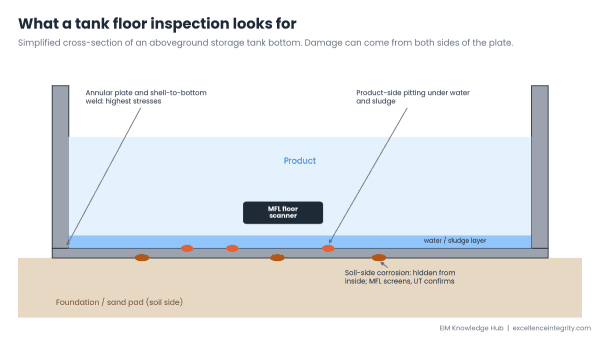
The product side of a tank bottom sits under a layer of water and sludge for years, which is exactly where pitting starts. An internal lining keeps that water off the steel. API RP 652, Lining of Aboveground Petroleum Storage Tank Bottoms, sets out when a lining makes sense, which type to choose, how to apply it, and why linings fail. Under API 653, a good lining can also extend the internal inspection interval.
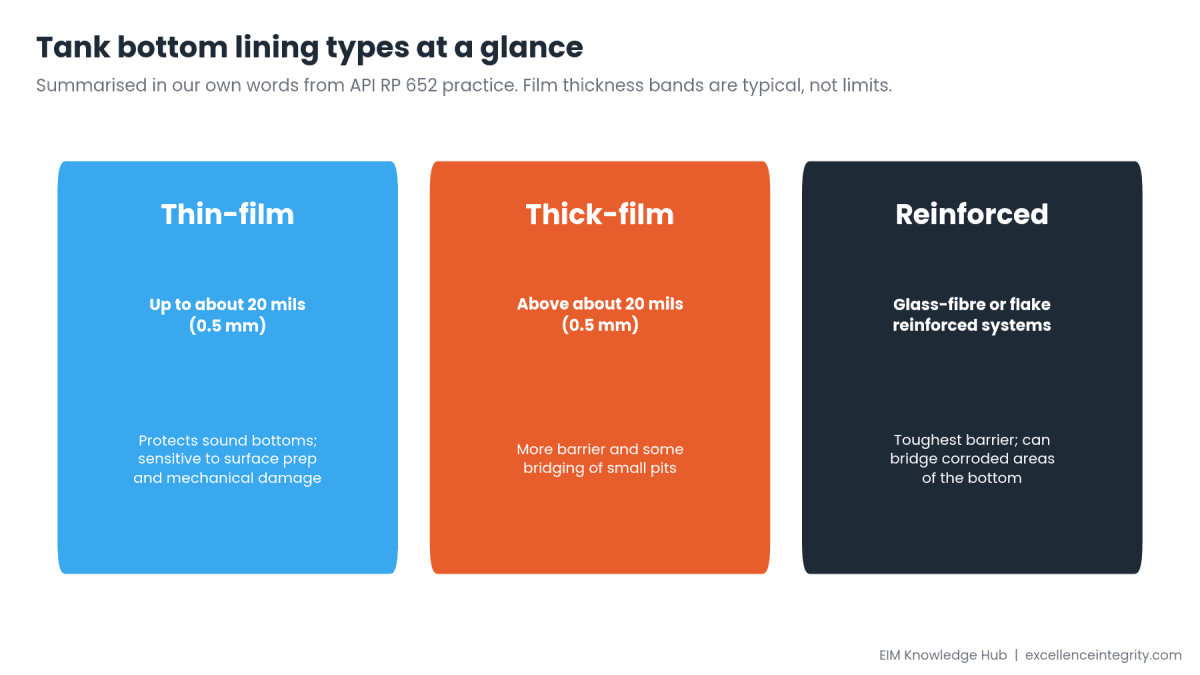
Short answer: Linings fall into three broad types: thin-film (up to about 20 mils), thick-film, and glass-fibre or flake reinforced systems. Most failures come from poor surface preparation, application outside the manufacturer's conditions, or inadequate curing, rather than from the product chosen. API 653 gives internal inspection interval credits for linings and, with a reinforced lining over 0.05 in thick, allows a lower minimum remaining bottom thickness.
Why line a tank bottom
- Stop product-side corrosion under water, sludge and sediment.
- Protect bottoms in corrosive services, or where water draw-off is difficult.
- Extend inspection intervals through API 653's safeguard credits.
- Restore an older bottom where reinforced systems can bridge corroded areas, subject to engineering assessment.
A lining protects the product side only. Soil-side corrosion needs its own protection, typically cathodic protection; see part 8, API RP 651.
Types of lining
| Type | Typical use | Watch-outs |
|---|---|---|
| Thin-film (up to about 20 mils / 0.5 mm) | Newer or sound bottoms; relatively low cost | Very sensitive to surface preparation and mechanical damage; limited ability to bridge pits |
| Thick-film (above about 20 mils) | Moderately corroded bottoms; more severe service | Needs careful application and cure; check compatibility with product and temperature |
| Reinforced (glass-fibre or flake) | Older or corroded bottoms; longest service life | Higher cost; quality depends heavily on preparation and workmanship |
Why linings fail
- Inadequate surface preparation: contamination, salts, wrong profile or flash rust under the lining.
- Application outside the manufacturer's limits: steel too cold, humidity too high, wrong film thickness.
- Inadequate cure before the tank is filled.
- Chemical or temperature incompatibility with the stored product.
- Mechanical damage from cleaning, equipment, or roof legs.
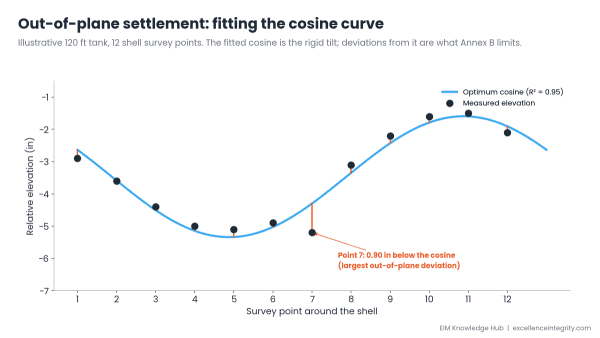
- Bottom movement: settlement and flexing crack linings, especially at welds and near the shell.
Getting it right: five steps
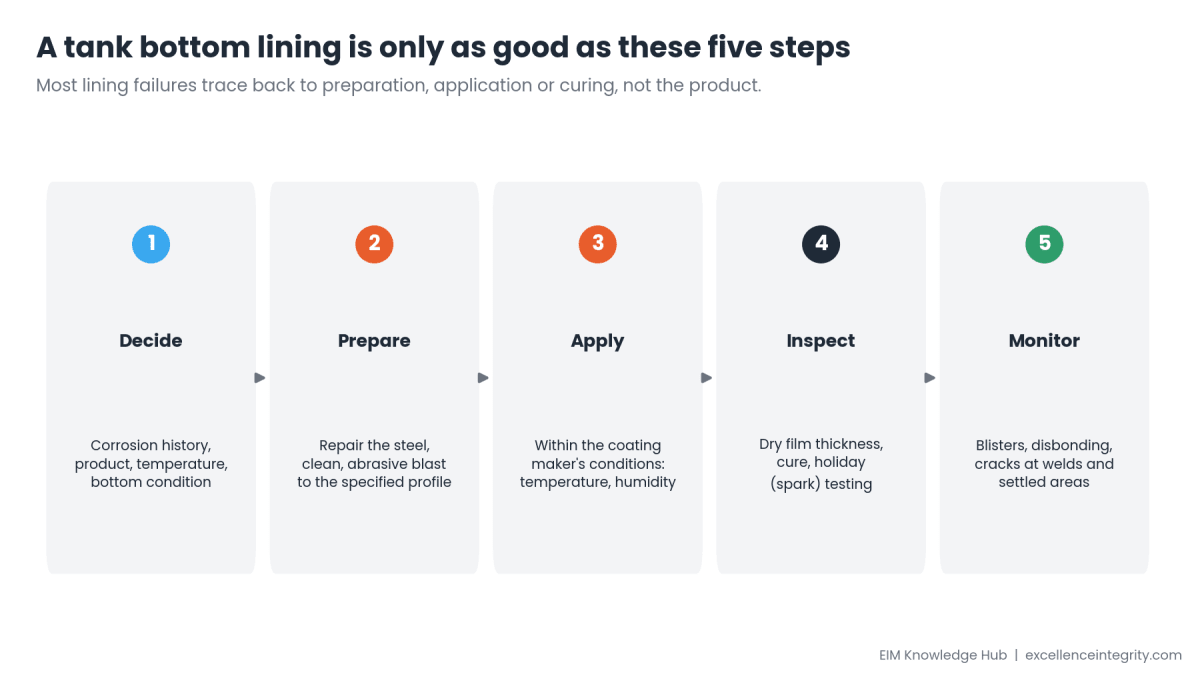
- Decide: review corrosion history, product, operating temperature and bottom condition. Repair or replace badly corroded plates first.
- Prepare: clean, remove contaminants, and abrasive blast to the cleanliness and anchor profile the lining specification requires.
- Apply: within the manufacturer's limits on steel temperature, dew point and humidity, to the specified film thickness.
- Inspect: dry film thickness, cure, and holiday (spark or wet-sponge) testing to find pinholes and thin spots.
- Monitor: at each internal inspection, look for blisters, disbonding, cracking at welds and settled areas, and repair promptly.
Coating inspection skills here overlap with AMPP's Coating Inspector Program; see our guide to AMPP CIP Levels 1 to 3.
Linings and API 653
- Interval credits: API 653's table of tank safeguards credits linings when setting the initial internal inspection interval, with a larger credit for reinforced linings than for thin-film ones.
- Minimum remaining thickness: with a reinforced lining more than 0.05 in thick, API 653 accepts a lower minimum bottom thickness at the next inspection (0.05 in rather than 0.10 in).
- Inspection: a lining hides the steel, so inspection plans must account for what the lining allows you to see and measure. See tank floor inspection.
Preparing for API 653
API RP 652 is on the API 653 effectivity sheet, and its 6th edition (December 2025) applies to the 2027 windows. EIM is an independent training provider; EIM's self-paced API 653 preparation covers RP 652 in its question bank, practice mode, timed mock tests, study notes and flashcards, with one year of access. See the API 653 page
Frequently asked questions
What does API RP 652 cover?
Linings for the product side of aboveground petroleum storage tank bottoms: lining types, when to use them, surface preparation, application, inspection and causes of failure.
What is the difference between thin-film and thick-film linings?
Thin-film linings are typically up to about 20 mils (0.5 mm) and suit sound bottoms. Thick-film linings are thicker and give more barrier and some ability to bridge small pits.
Why do tank linings fail?
Most often because of poor surface preparation, application outside the manufacturer's conditions, or inadequate cure. Incompatibility, mechanical damage and bottom movement also cause failures.
Does a lining extend the API 653 inspection interval?
Yes. API 653 credits linings when setting the initial internal inspection interval, with a larger credit for reinforced linings.
Does a lining protect the soil side?
No. Soil-side corrosion needs separate protection, typically cathodic protection under API RP 651.
Sources
- API: API 653 Body of Knowledge, March 2027 (API RP 652 topics)
- API RP 652, Lining of Aboveground Petroleum Storage Tank Bottoms. Summarised, not quoted.
- Sherwin-Williams technical advice: API 652 compliance linings and API 653 intervals
- Checked 7 October 2026.