Boiler Tube Failures: Causes, Warning Signs and Prevention
Overheating, creep, pitting, erosion, fatigue, weld and deposit failures in boiler tubes: what causes each, the first signs and how to prevent them.
By Syed Hasan25 Oct 20267 min read
A boiler tube rarely fails without warning. Before it splits, it usually bulges, thins, discolours, scales up or leaks at a weld, and an inspector who knows what to look for can catch it at a planned shutdown instead of during a forced outage at three in the morning.
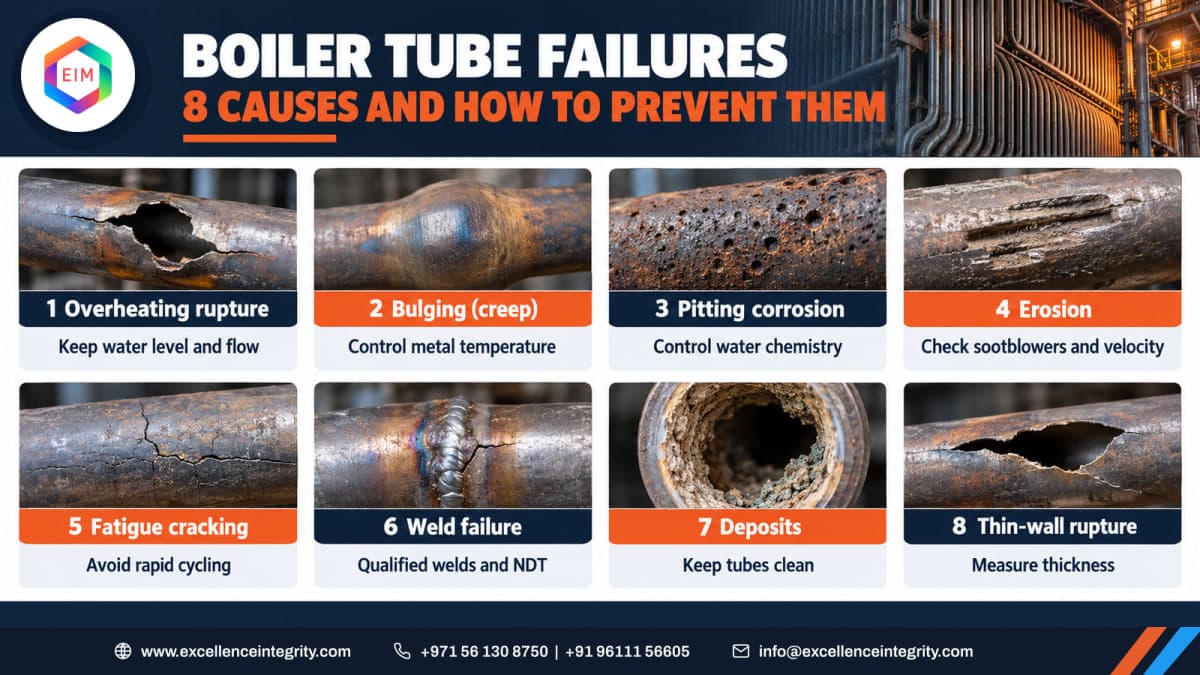
This article goes through the eight failure types you meet most often in water-tube boilers, what causes each one, the signs that show up first, and what stops it coming back. Most of them trace back to the same three things: water chemistry, metal temperature and how the boiler is operated.
Why boiler tubes fail at all
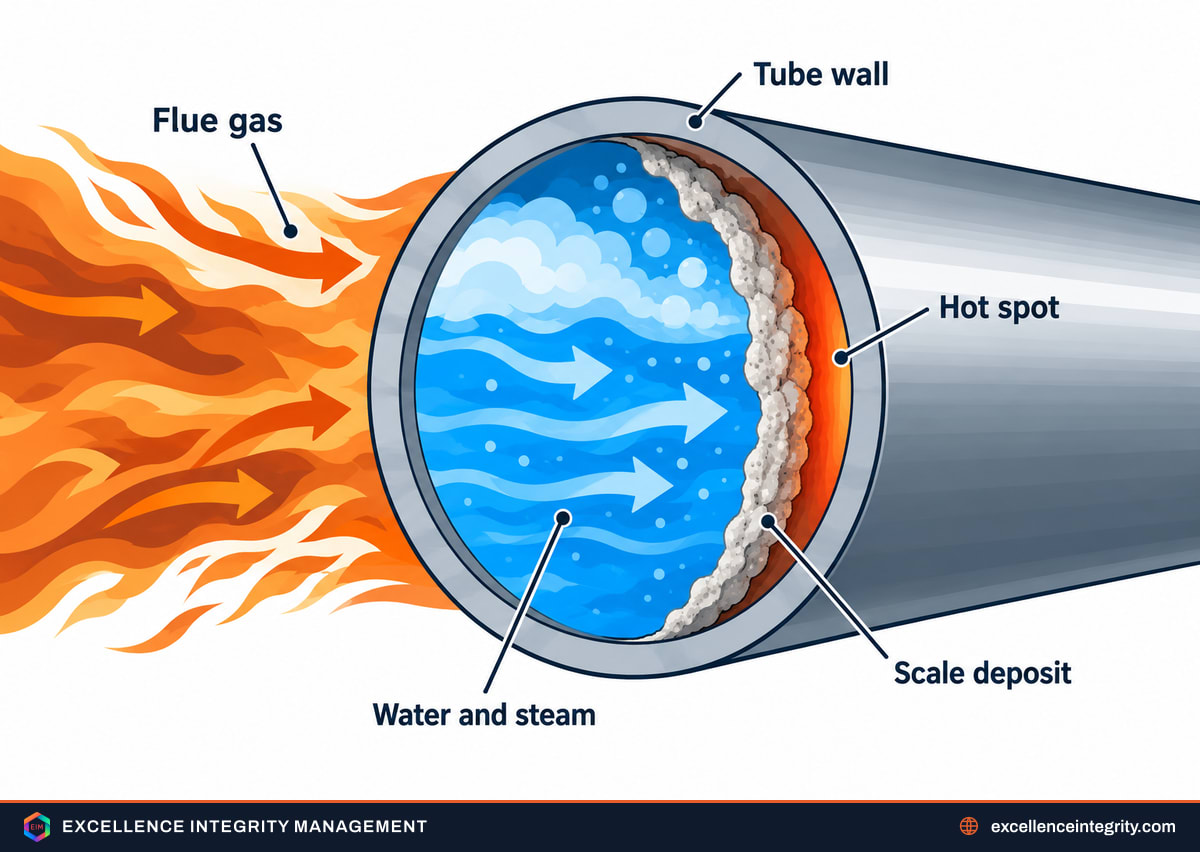
A boiler tube is a thin wall of steel with flame or hot flue gas on one side and water or steam on the other. As long as water keeps the tube wall cool and the wall stays thick enough for the pressure, it lasts for decades. Almost every failure starts when one of those two conditions breaks down:
- The metal runs too hot, because water flow is lost, scale insulates the inside of the tube, or firing is uneven. Steel loses strength fast as temperature rises.
- The wall gets too thin, through corrosion on the water side or erosion and corrosion on the fire side, until the remaining steel cannot hold the pressure.
- The tube is cycled by repeated start-ups, shutdowns and load swings, which crack it at points of restraint and at welds.
Keep those three in mind and the failure types below sort themselves out.
The eight common boiler tube failures
1. Short-term overheating rupture
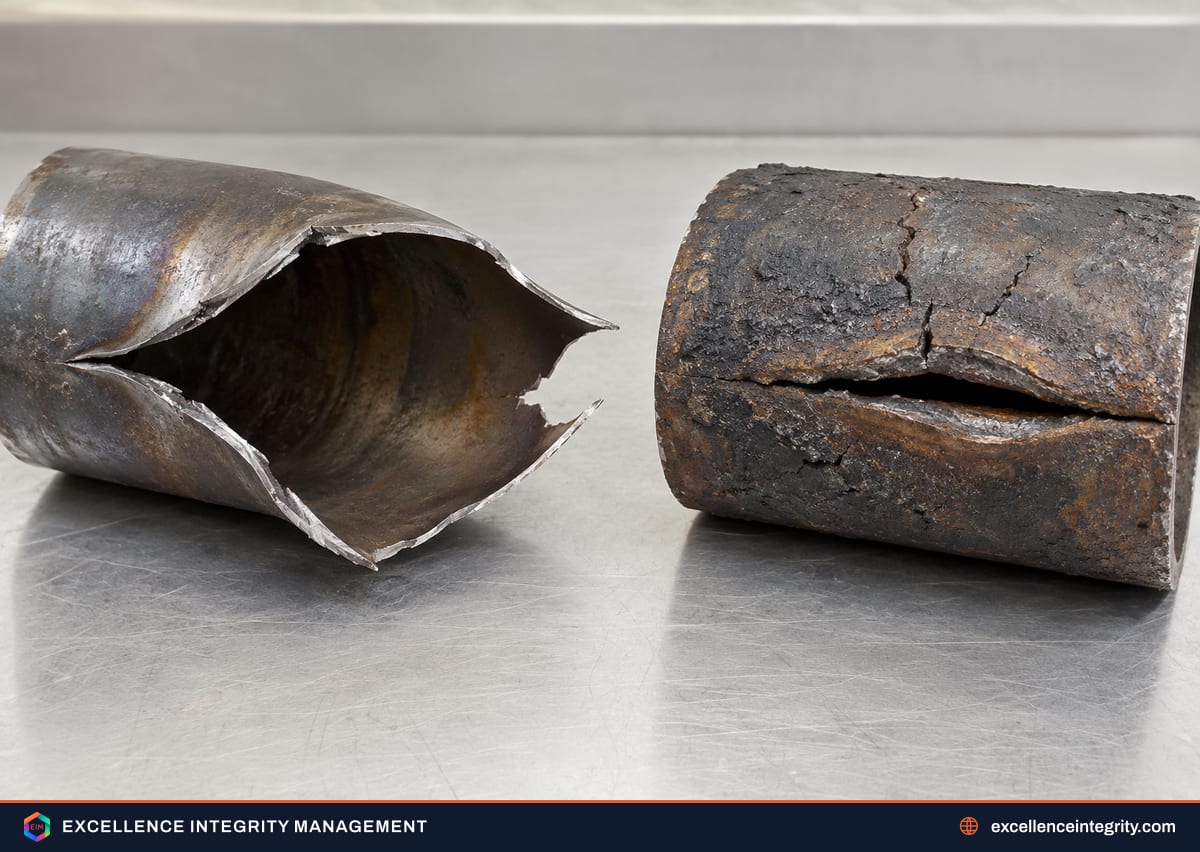
When water flow stops or drops sharply, for example from low drum level, a blocked tube or a circulation upset, the tube metal can climb hundreds of degrees in minutes. It swells and bursts in a thin-lipped, "fish-mouth" rupture with sharp, knife-edge lips. The wall at the opening is visibly thinned because the steel stretched before it tore.
Prevention: reliable drum level control and alarms, trips that work, and checking for blocked tubes after any chemical clean or repair.
2. Bulging and long-term overheating (creep)
A tube that runs a little too hot for months or years does not burst suddenly. It creeps: the steel slowly stretches under pressure, the tube bulges, and the outside develops a thick oxide scale. The final rupture is a thick-lipped split with little thinning at the edges, often surrounded by small longitudinal cracks.
Warning signs: measurable swelling of the tube diameter, heavy external oxide, and tube metal temperatures above design on thermocouples. Prevention: control firing and steam temperature, keep the inside of the tube clean, and track diameter growth on known hot spots at each outage.
3. Water-side corrosion and pitting
Dissolved oxygen in the feedwater attacks the inside of tubes and economisers as sharp, localised pits, often with a reddish oxide cap. Poor water chemistry in general, such as wrong pH or contamination from a condenser leak, causes broader attack such as caustic gouging or hydrogen damage under deposits.
Prevention: deaeration and oxygen scavenging, a water treatment programme with regular testing, and fast action on any chemistry excursion. Pits found during an internal inspection are a warning about the water, not only about the tube.
4. Erosion and wall thinning
On the fire side, fly ash and sootblower steam scour tubes at bends, near baffles and where flue gas speeds up. The surface looks polished and smooth, with the wall thinned on the side facing the flow. Water-side, high velocity at bends and inlets can thin tubes in the same way.
Prevention: correct sootblower set-up and pressure, shields or wear protection on known hot spots, and thickness surveys concentrated where flow is fastest.
5. Thermal fatigue cracking
Every start-up, shutdown and load change heats and cools the tubes at different rates. Where a tube is held rigidly, at attachments, headers and supports, the repeated strain cracks it, often circumferentially. Corrosion fatigue, where the cracks are filled with oxide and grow through a protective layer, is common in tubes near the drum and at economiser inlets.
Prevention: controlled heating and cooling rates, fewer unnecessary cycles, and checking attachment welds and restrained areas with surface crack detection at outages.
6. Weld failures, including dissimilar metal welds
Poor welding, lack of fusion, wrong filler or a missed post-weld heat treatment leave weak points that crack in service. A particular problem is the dissimilar metal weld between a ferritic tube and an austenitic stainless steel tube in superheaters and reheaters. The two steels expand at different rates and the joint degrades at high temperature, typically failing along the fusion line on the ferritic side after long service.
Prevention: qualified welding procedures and welders, the right filler for the joint, heat treatment where the code requires it, and NDT such as radiography or ultrasonic testing on repair welds.
7. Failures caused by water-side deposits
Scale and sludge on the inside of a tube act as insulation. Heat cannot reach the water as easily, so the metal behind the deposit runs hotter, and that leads straight back to overheating and creep. Deposits also trap boiler water chemicals against the steel and cause corrosion underneath them.
Prevention: keep feedwater hardness, silica and iron low, blow down correctly, and chemically clean the boiler when deposit weight on sample tubes says it is due rather than on a fixed calendar.
8. Thin-wall rupture
When corrosion or erosion has removed enough metal, a tube finally fails at normal pressure and temperature. The rupture is usually small and ragged, in a patch of steel already much thinner than its neighbours. This one is the most avoidable: the thinning was there to be measured for a long time.
Prevention: regular ultrasonic thickness surveys, a minimum allowable thickness for each tube bank, and replacing tubes when they approach it rather than when they leak. The same arithmetic used for corrosion rate and remaining life on piping applies here.
Quick reference: failure, cause, first sign
| Failure | Main cause | What you see first |
|---|---|---|
| Short-term overheating | Sudden loss of cooling water | Thin-lipped fish-mouth burst |
| Creep (long-term overheating) | Metal slightly too hot for a long time | Bulging, thick outside oxide |
| Pitting corrosion | Oxygen and poor water chemistry | Pits inside the tube or economiser |
| Erosion | Ash, sootblowers or high velocity | Smooth, polished thinning on one side |
| Thermal fatigue | Start-stop cycling at restrained points | Circumferential cracks near attachments |
| Weld failure | Poor welding, dissimilar metal joints | Cracks along the fusion line |
| Deposit-related | Scale and sludge insulating the wall | Hot spots, then bulging |
| Thin-wall rupture | Unchecked corrosion or erosion | Small ragged rupture in thin steel |
What to check at every boiler inspection
Boiler inspectors often say that most tube failures give a warning before they let go. A practical outage checklist catches most of them:
- Visual walk-down of furnace walls, superheaters and economisers for bulges, sagging, discolouration and erosion polish.
- Ultrasonic thickness readings on a fixed grid at known thinning areas, so the trend from outage to outage is real.
- Diameter checks on high-temperature tubes to measure creep swelling.
- Sample tube removal for deposit weight and metallurgy when the history suggests it.
- Surface crack testing (magnetic particle or dye penetrant) at attachment welds and dissimilar metal welds.
- Water chemistry records reviewed alongside the findings, because the cause of inside-the-tube damage is usually in the logbook.
When a tube does fail, cut out the failed section with enough length either side and examine it before throwing it away. The shape of the rupture lips, the oxide thickness and the deposits tell you which of the eight it was, and that decides whether replacing the tube is the end of the job or the start of a wider fix.

Going further
Overheating, creep, pitting, erosion and fatigue are all damage mechanisms covered in API 571, and recognising them on real equipment is a core inspector skill. See the API 571 certification preparation, the material selection and failure analysis course, and the welding repair and inspection course for weld-related failures. Fired heaters suffer many of the same mechanisms, covered in our guide to refinery fired heaters. Questions about a specific boiler? Get in touch.
Enjoyed the question? See more practice for API 571 Corrosion and Materials