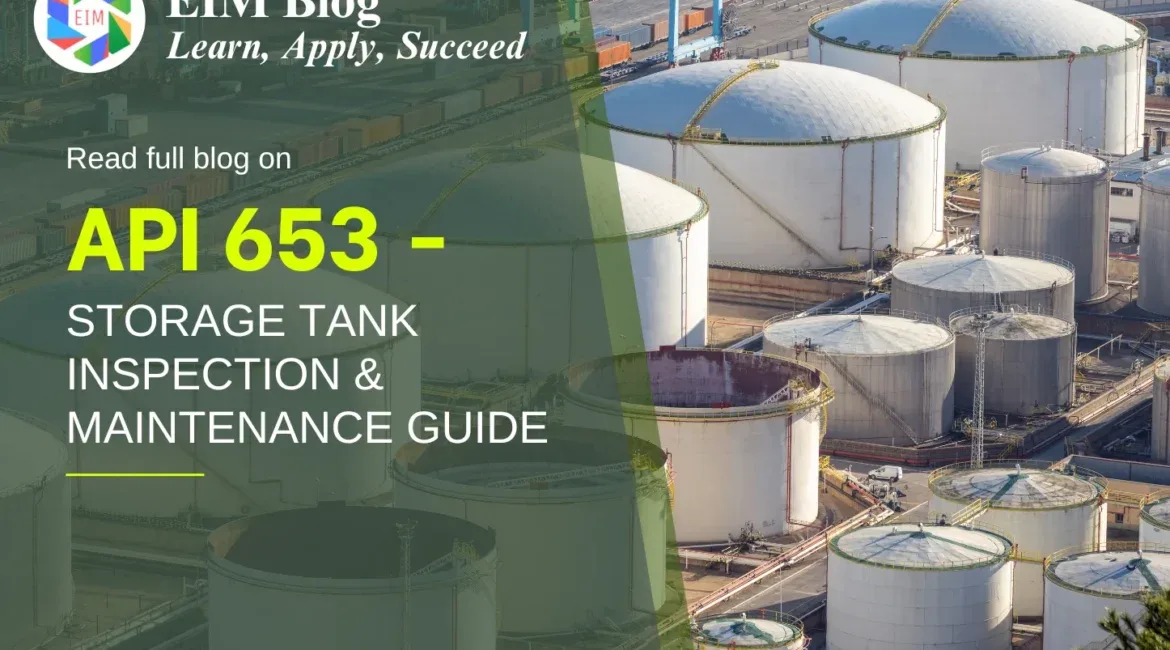
API 653 – Storage Tank Inspection & Maintenance Guide
Above-ground storage tanks (ASTs) are critical assets in the oil and gas industry, used to store everything from crude oil and refined fuels to chemicals and wastewater. While their role in day-to-day operations is often taken for granted, inadequate inspection and maintenance can lead to catastrophic failures, costly cleanups, and regulatory penalties. Proactive care of ASTs is not just good engineering—it’s a sound financial and environmental strategy.
Table of Contents
- What Are Above-Ground Storage Tanks (ASTs)?
- Why AST Inspection and Maintenance Matter
- Key Regulations and Industry Standards
- Inspection Techniques and Technologies
- Maintenance Checklist & Strategies
- Failure Mechanisms and Risk Areas
- Case Studies: Failure vs. Prevention
- Conclusion: ROI of Proactive Maintenance
What Are Above-Ground Storage Tanks (ASTs)?
ASTs are large, robust containers used for storing a variety of liquids, including petroleum products, chemicals, and water. Unlike underground tanks, ASTs are installed above the surface, allowing for easier access and inspection. They can be found in many sectors including oil & gas, chemicals, transportation, agriculture, manufacturing, and food processing industries.
Why AST Inspection and Maintenance Matter
Proper AST inspection and maintenance is critical for ensuring structural integrity, operational efficiency, and regulatory compliance. Failing to inspect and maintain ASTs can lead to leakage, environmental contamination, fire hazards, and even tank collapse. Moreover, the financial costs associated with reactive maintenance, litigation, and cleanup far exceed those of scheduled upkeep.
- Prevent catastrophic spills and safety incidents
- Maintain operational efficiency and minimize downtime
- Extend tank life and reduce replacement costs
- Ensure compliance with EPA, API, NFPA and local regulations
Key Regulations and Industry Standards
- API 653: Governs inspection, repair, alteration, and reconstruction of steel ASTs.
- API 650: Focuses on the design and construction of welded tanks for oil storage.
- STI SP001: Covers smaller, shop-fabricated ASTs including risk-based inspection frequencies.
- EPA 40 CFR Part 112: U.S. Spill Prevention, Control, and Countermeasure (SPCC) regulations.
- NFPA 30: Flammable and combustible liquid code enforced by fire departments.
- EEMUA 159: UK-based inspection and maintenance guide for cylindrical vertical storage tanks.
Inspection Techniques and Technologies
Advanced non-destructive testing (NDT) methods allow inspectors to assess tank integrity without dismantling or emptying the tank:
- Visual Inspection: Detects external corrosion, bulging, cracks, or coating damage.
- Ultrasonic Testing (UT): Measures wall thickness and maps corrosion.
- Magnetic Flux Leakage (MFL): Detects pitting, flaws and thinning in the tank floor.
- Radiographic Testing: Examines welds for cracks or voids.
- Drones & Robotics: Used for high-risk or hard-to-reach areas like roofs and internal spaces.
- Acoustic Emission Testing: Identifies active crack growth and leak sources during pressurization.
- Thermography: Assesses heat distribution to spot blockages, fluid layering, or insulation degradation.
Maintenance Checklist & Strategies
- Exterior Inspection: Check for dents, leaks, foundation stability, rust, and paint breakdown.
- Interior Inspection: Look for sludge buildup, corrosion, and microbial activity.
- Valves & Fittings: Ensure all components are leak-free, corrosion-resistant, and operational.
- Tank Capacity: Monitor filling levels to prevent overpressure or underfilling collapse.
- Documentation: Maintain up-to-date records of inspection reports, permits, and maintenance logs.
- Coating & Cathodic Protection: Reapply protective coatings periodically and inspect sacrificial anodes.
- Leak Detection Systems: Install and regularly calibrate continuous monitoring sensors.
- Routine Cleaning: Schedule periodic cleanouts to remove sludge and residues.
- Training & SOPs: Ensure your team is trained on the latest SOPs and hazard prevention practices.
Failure Mechanisms and Risk Areas
- Corrosion: Especially on tank floors and near weld joints where water accumulates.
- Structural Weakening: Due to metal thinning, fatigue, or seismic and wind loads.
- Foundation Settlement: Causes shell distortion, annular ring stress, or cracking.
- Vacuum Collapse: Tanks can implode during unloading if vents are clogged or missing.
- Weld Failures: Defective or aged welds can crack under cyclical pressure loads.
- Microbial-Induced Corrosion: Sulfate-reducing bacteria can degrade steel from the inside.
- External Impacts: Collisions with mobile equipment cause severe breaches.
Case Studies: Failure vs. Prevention
- Case 1 (Refinery Tank Failure in India): Failure to conduct routine API 653 inspections resulted in a tank bottom rupture and fines exceeding ₹20 crore.
- Case 2 (UAE Tank Farm Success): Regular ultrasonic and MFL floor scans saved over $5 million in predictive repairs.
- Case 3 (Gulf Coast Chemical Facility): Drone inspections reduced man-entry risk and cut inspection time by 60%.
Conclusion: ROI of Proactive Maintenance
ASTs are high-value assets that require strategic oversight and care. Proactive inspection and maintenance offer massive returns by minimizing risk, ensuring compliance, and maximizing equipment life. Instead of waiting for a leak or explosion, tank operators must prioritize preventive action—because safety, sustainability, and savings go hand in hand.
Stay ahead—invest in routine AST inspections, adopt advanced NDT techniques, implement a digital asset management system, and align with API 653 and STI SP001 standards for unmatched safety and performance.