
 Join Our 4-Days Live Online Training on FEED (Front End Engineering & Design)
 Subtotal: $150.00
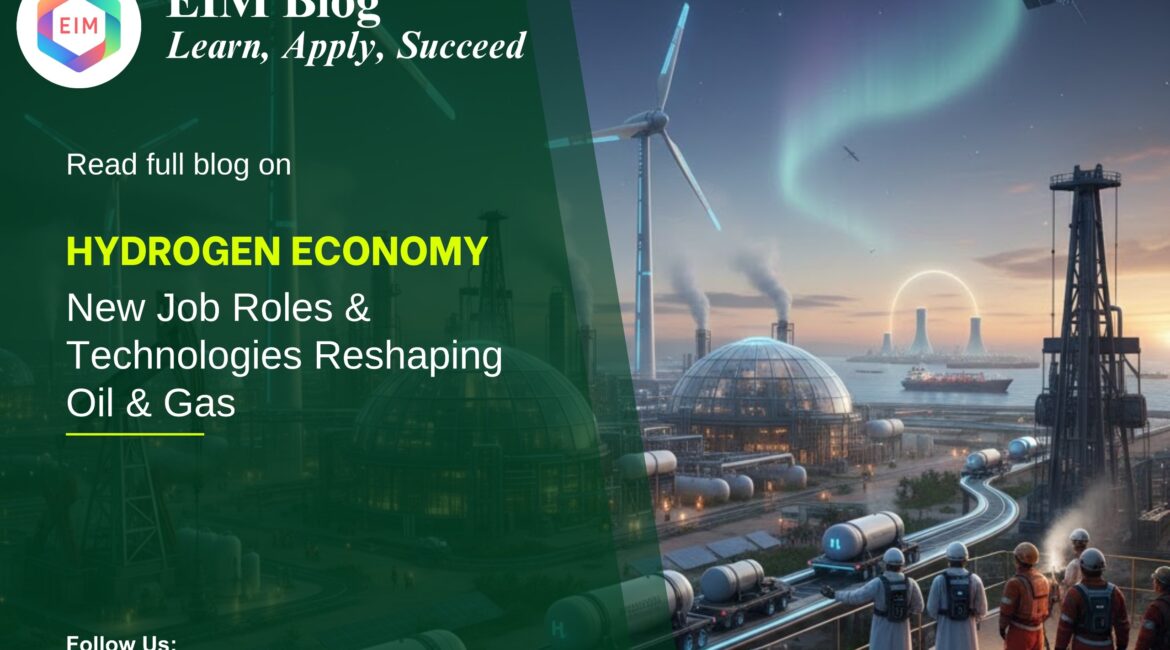
10 New Hydrogen Job Roles & Technologies Reshaping Oil & Gas Careers
Hydrogen is rapidly moving beyond pilot projects to become a core pillar of oil & gas decarbonization strategies. Rather than disrupting the existing workforce, hydrogen development is re-deploying decades of oil & gas expertise—from process engineering and subsurface analysis to project execution and digital optimization—into a lower-carbon energy future.
As refineries, pipelines, and power systems adapt to hydrogen integration, new career pathways are emerging for engineers, technicians, safety professionals, and digital specialists who already understand complex energy systems.
Hydrogen’s Strategic Role in the Future of Oil & Gas
Hydrogen has long been a critical input in refineries, particularly for hydrotreating, hydrocracking, and upgrading heavy crudes. Today, low-carbon hydrogen—produced via carbon-captured reforming or renewable electrolysis—is becoming central to net-zero roadmaps across upstream, midstream, and downstream operations.
Simultaneously, green hydrogen and fuel-cell technologies are opening new growth areas in power generation, mobility, and industrial decarbonization—sectors where oil & gas companies already operate, invest, and manage infrastructure.
This convergence is reshaping career trajectories across the industry.
10 New Hydrogen Job Roles Reshaping Oil & Gas Careers
1. Hydrogen Process Engineer
Hydrogen process engineers design, optimize, and troubleshoot production units such as steam methane reformers (SMR), autothermal reformers (ATR), and integrated carbon-capture systems within refineries or standalone hydrogen hubs.
Professionals with backgrounds in process engineering, gas processing, or hydroprocessing can transition into this role by building expertise in hydrogen thermodynamics, reforming reactions, and CCS integration.
2. Electrolyzer Systems Engineer
Electrolyzer systems engineers design and integrate PEM, alkaline, or solid-oxide electrolyzers with renewable power sources, water treatment systems, and balance-of-plant utilities.
Electrical, chemical, and mechanical engineers from power plants, utilities, or rotating equipment backgrounds are well positioned for this role by learning electrolysis fundamentals and power-to-X system design.
3. Hydrogen Plant Operations & Maintenance Technician
These technicians operate hydrogen production facilities, manage safe start-ups and shutdowns, and perform routine inspection and maintenance on compressors, electrolyzer stacks, and ancillary systems.
Oil & gas technicians with experience in industrial gas plants, refineries, or LNG facilities are increasingly sought after, especially when complemented by hydrogen-specific safety certification.
4. Underground Hydrogen Storage Engineer
Underground hydrogen storage engineers assess salt caverns, depleted reservoirs, and aquifers for large-scale hydrogen storage and design injection, withdrawal, and monitoring strategies.
Reservoir engineers and subsurface professionals from gas storage, EOR, or underground gas projects can pivot into this role by understanding hydrogen’s diffusion, reactivity, and microbial risks in subsurface environments.
5. Hydrogen Pipeline Design & Integrity Engineer
These engineers evaluate new and existing pipelines for hydrogen service, addressing material compatibility, hydrogen embrittlement, leak detection, and integrity management.
Pipeline integrity, corrosion, and RBI specialists from the gas sector are in high demand to support hydrogen blending, dedicated hydrogen corridors, and repurposed gas networks.
6. Fuel Cell Systems Engineer
Fuel cell systems engineers design and integrate fuel-cell stacks and hybrid systems for stationary power, backup generation, mobility, and remote operations.
Professionals with experience in gas turbines, microgrids, power packages, or offshore power systems can transition effectively into fuel-cell system design and integration roles.
7. Hydrogen Safety and Risk Engineer
Hydrogen safety engineers lead HAZOP studies, consequence modeling, and safety case development for hydrogen plants, pipelines, storage sites, and fuel-cell installations.
Process safety and HSE professionals from refineries, LNG, petrochemical complexes, and offshore facilities can transfer their expertise while learning hydrogen-specific dispersion, ignition, and detection characteristics.
8. Hydrogen Project Manager (EPC)
Hydrogen project managers oversee concept studies, FEED, detailed engineering, construction, and commissioning of hydrogen and hybrid renewable-hydrogen projects.
EPC and project managers from upstream, midstream, or downstream megaprojects are already being recruited into hydrogen hubs, industrial clusters, and export-oriented hydrogen developments worldwide.
9. Hydrogen Data & Energy Systems Analyst
These analysts develop techno-economic models, dispatch simulations, and optimization tools to size plants, reduce operating costs, and integrate hydrogen systems with electricity markets.
Digital oilfield professionals, production planners, and control engineers can move into this role by learning LCOH modelling, energy market analytics, and hybrid system optimization.
10. Hydrogen Business Development & Policy Specialist
Business development and policy specialists originate hydrogen projects, structure offtake agreements, and navigate evolving regulations, incentives, and carbon pricing mechanisms.
Commercial managers and strategists from oil & gas trading, project development, and energy transition teams are increasingly leading hydrogen ventures and partnerships.
Key Technologies Driving Hydrogen Career Growth
Low-Carbon Hydrogen Production
SMR with carbon capture, biomass gasification, and renewable-powered electrolysis are forming the backbone of emerging hydrogen value chains. Many refineries already depend on external hydrogen suppliers, making in-house low-carbon hydrogen production a logical next step.
Hydrogen Storage & Transport
Large-scale hydrogen deployment depends on underground storage, high-pressure systems, and pipeline networks. Existing gas infrastructure is being assessed for hydrogen compatibility, creating strong demand for integrity, corrosion, and safety expertise.
Fuel Cells & Hydrogen End-Use
Fuel cells are gaining traction for backup power, off-grid operations, heavy-duty transport, and remote facilities—all common oil & gas operating environments. Hydrogen is also being piloted as a cleaner alternative to diesel for rigs and auxiliary power.
Digitalization & AI for Hydrogen Systems
Digital twins, predictive maintenance, and real-time optimization—already familiar in digital oilfields—are now being applied to electrolyzers, compressors, and fuel-cell stacks. Data-driven energy management is essential for operating hybrid systems combining renewables, batteries, grids, and hydrogen.
How Oil & Gas Professionals Can Prepare for Hydrogen Careers
Transitioning into hydrogen does not require starting from scratch. The most successful professionals focus on targeted upskilling rather than full retraining.
Practical Steps:
-
Build a foundation in hydrogen fundamentals, production routes, and safety through short courses or micro-credentials
-
Map existing expertise—process, subsurface, integrity, digital, or commercial—to the ten hydrogen roles outlined above
-
Align CVs and LinkedIn profiles with emerging hydrogen job descriptions and keywords
-
Participate in pilot projects, internal decarbonization initiatives, or hydrogen taskforces to gain hands-on exposure
Final Thought
Hydrogen is not replacing oil & gas careers—it is evolving them. Professionals who adapt early will be at the forefront of building a resilient, low-carbon energy system using the skills the industry already knows best.