
Asset Integrity 2.0: Modern RBI, NDT & Corrosion Control for Aging Infrastructure
Asset Integrity 2.0 addresses one of the most serious challenges facing oil & gas, petrochemical, power generation, and process facilities worldwide. Many plants and pipelines are operating well beyond their original design life under harsher conditions and stricter regulatory expectations. Failures from corrosion, fatigue, erosion, or mechanical degradation can quickly escalate into safety incidents, environmental releases, unplanned shutdowns, and major financial losses.
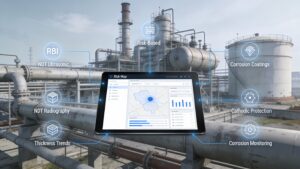
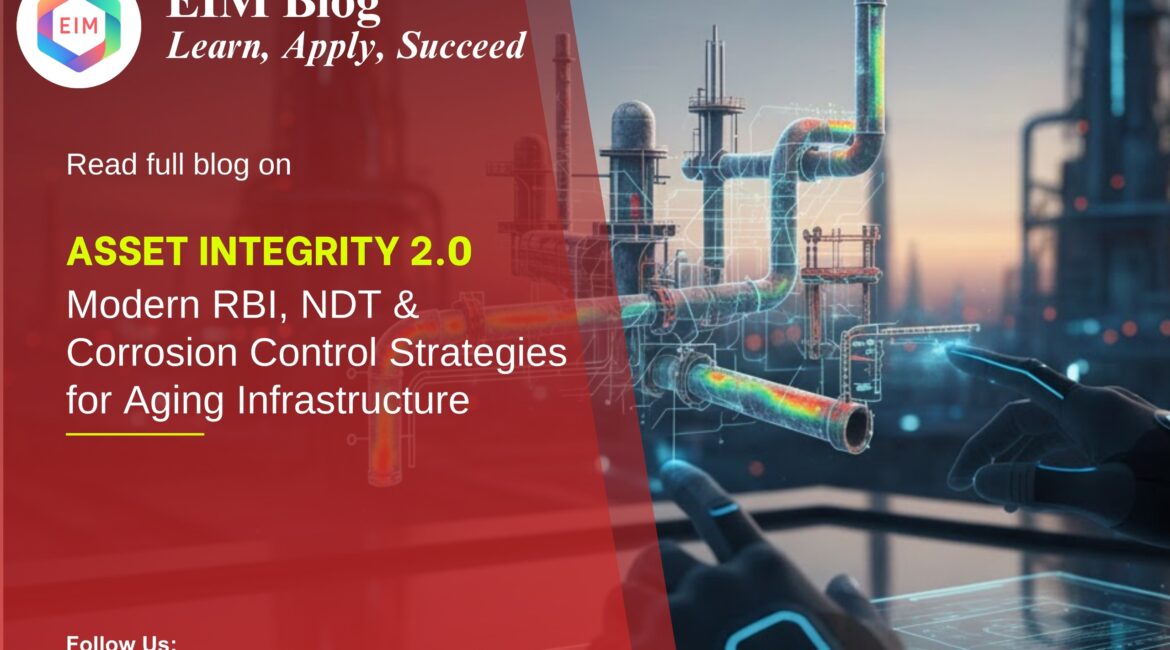
Asset Integrity 2.0 is a modern, data‑driven approach that combines Risk‑Based Inspection (RBI), advanced Non‑Destructive Testing (NDT), and robust corrosion control, all enabled by digital platforms and predictive analytics, to move from reactive repairs to proactive lifecycle integrity management.
Now “Asset Integrity 2.0” appears twice in the first paragraph, making the topic crystal clear from the start while maintaining natural flow.
Asset Integrity in Aging Facilities
Asset integrity is the ability of an asset to operate safely, reliably, and efficiently throughout its lifecycle. In aging facilities, integrity threats grow due to material degradation, outdated design standards, more severe operating envelopes, and accumulated maintenance backlogs.
Time‑based inspection approaches, where everything is inspected at fixed intervals, often lead to over‑inspection of low‑risk equipment and missed emerging risks on critical systems. Asset Integrity 2.0 addresses this by prioritizing risk, integrating data, and continuously updating the understanding of asset condition.
What Is Asset Integrity 2.0?
Asset Integrity 2.0 is the evolution from reactive, compliance‑driven maintenance to risk‑informed, predictive, and digitally enabled integrity management. It is built on three pillars:
-
Modern Risk‑Based Inspection (RBI)
-
Advanced NDT for accurate condition assessment
-
Comprehensive corrosion control strategies
What Makes “2.0” Different?
Asset Integrity 2.0 is distinguished by:
-
Adaptive RBI: Risk models updated with real‑time process and corrosion data, including Integrity Operating Windows (IOWs).
-
Digital platforms and digital twins: Integrated environments connecting RBI, NDT, corrosion monitoring, cathodic protection (CP), coatings, and maintenance.
-
Predictive and condition‑based approaches: Analytics and online monitoring reduce reliance on fixed‑interval inspections alone.
This creates a dynamic, data‑rich view of asset health that improves with every inspection, survey, and process data point.
Modern Risk‑Based Inspection: Core of Asset Integrity 2.0
Principles of RBI
Risk‑Based Inspection (RBI) prioritizes inspection based on Probability of Failure (PoF) and Consequence of Failure (CoF), focusing resources on the highest‑risk equipment. Modern RBI is typically aligned with standards such as API 580/581 and forms the backbone of many asset integrity programs.
Damage Mechanism and Threat Identification
RBI begins by identifying applicable damage mechanisms for each asset or corrosion circuit:
-
Internal and external corrosion, including CUI
-
Erosion and erosion‑corrosion
-
Fatigue and vibration‑induced cracking
-
Stress corrosion cracking (SCC)
-
High‑temperature damage (creep, HTHA)
-
Mechanical and thermal fatigue
This step uses process conditions, materials, operating history, and known industry failure modes.
Probability and Consequence of Failure
PoF is estimated using degradation models, historical inspection data, process trends, and material properties, with advanced programs applying probabilistic and predictive models. Deviations from IOWs (such as temperature, pH, or composition excursions) can automatically increase PoF.
CoF considers safety, environmental impact, production losses, and reputational effects, ensuring that both high‑hazard and high‑value assets receive appropriate focus.
Inspection Planning and Benefits
RBI outputs:
-
Optimized inspection intervals
-
Appropriate inspection methods (UT, PAUT, TOFD, DR/CR, guided wave, etc.)
-
Defined coverage and locations
Adaptive RBI refines these plans as new NDT, CP, coating, and corrosion monitoring data are added. Typical benefits include lower inspection backlog and cost, improved safety, better planned outages, and defensible life‑extension decisions.
Advanced NDT Techniques for Aging Assets
NDT verifies actual condition and provides the quantitative data needed for RBI and Fitness‑For‑Service (FFS) decisions.
Weld Integrity
-
Digital Radiography (DR/CR): Faster imaging, higher quality, easier archiving, and lower radiation doses compared to film; widely used for welds and CUI.
-
Phased Array Ultrasonic Testing (PAUT): Multi‑angle, high‑resolution inspection for full weld volume and corrosion mapping, often with 3D imaging.
-
Time‑of‑Flight Diffraction (TOFD): Accurate crack sizing and depth, especially powerful combined with PAUT for critical welds.
Long‑Range and Difficult Access
-
Guided Wave Ultrasonic Testing: Long‑range screening from a single location for buried, insulated, or elevated pipelines and crossings.
-
Drones and Remote Visual Inspection (RVI): UAVs and robots reduce scaffolding and confined‑space entry, enabling safer and more frequent inspections with high‑resolution visuals.
Tubes, Surfaces, and Corrosion Mapping
-
Eddy Current Array (ECA): Rapid inspection of heat exchanger tubes and non‑ferromagnetic components, detecting surface and near‑surface flaws.
-
Automated Thickness and Corrosion Mapping: Detailed thickness profiles, high repeatability, and trend analysis for vessels, tanks, exchangers, and critical piping.
In Asset Integrity 2.0, NDT moves toward “NDT 4.0”: automated data capture, standardized digital reporting, and integration into RBI, FFS, and digital twin models.
Corrosion Control in Asset Integrity 2.0
Corrosion is a primary degradation mechanism in oil & gas and process infrastructure. Effective control demands multidisciplinary coordination and tight integration with RBI and digital systems.
Materials and Life‑Extension Choices
For aging assets, integrity teams assess options such as:
-
Upgrading to corrosion‑resistant alloys (CRAs) in high‑risk areas
-
Applying internal linings or cladding
-
Selective replacement strategies guided by RBI and FFS
These choices are made based on risk, remaining life, downtime impact, and CAPEX availability, not age alone.
Corrosion Inhibitors and Monitoring
Modern programs use:
-
Corrosion probes, coupons, and online UT for real‑time or near‑real‑time feedback
-
Adaptive inhibitor dosing strategies based on measured corrosion performance
-
KPIs and performance‑based contracts with chemical providers
This approach allows early intervention when corrosion accelerates or process conditions shift.
Coatings, Linings, and CP
High‑performance coatings and linings, when properly applied and inspected, provide long‑term protection for external surfaces and immersion services. For buried and submerged assets, CP systems remain essential, with routine surveys and CP data feeding into corrosion risk evaluations and RBI.
Operational Controls and IOWs
Corrosion risk can often be reduced via operations:
-
Control of oxygen, moisture, and contaminants
-
Flow velocity management and elimination of dead legs
-
pH and chemistry control within defined IOWs
Embedding these controls in procedures and monitoring them digitally is a powerful, low‑cost mitigation strategy.
RBI, FFS, and Life‑Extension Decisions
Asset Integrity 2.0 tightly couples RBI, advanced NDT, and FFS to support safe, economical life extension for aging assets.
-
RBI identifies where and how to inspect.
-
NDT quantifies actual damage.
-
FFS evaluates whether components can safely remain in service, be repaired, or must be replaced.
This run‑repair‑replace framework supports transparent and defensible CAPEX decisions.
Digital Platforms, Digital Twins, and Integration
The real step‑change comes from integrating people, processes, and data on digital platforms.
Digital Asset Integrity Platforms
Modern platforms connect:
-
RBI models and inspection plans
-
NDT, CP, and corrosion monitoring data
-
Coating and structural inspection results
-
Work orders and maintenance history from CMMS/EAM systems
They create a “digital thread” that links design, operation, inspection, and maintenance, improving visibility and decision‑making.
Digital Twins and Online Monitoring
Digital twins of critical equipment and systems can:
-
Visualize degradation hotspots and remaining thickness
-
Simulate future operation scenarios and Remaining Useful Life (RUL)
-
Fuse process, vibration, and corrosion data with NDT results into a living health model
Online monitoring (permanent UT sensors, corrosion probes, vibration sensors, analyzers) feeds both twins and RBI, enabling adaptive inspection plans and early risk detection.
Governance, Organization, and Culture
Successful Asset Integrity 2.0 requires more than technology; it needs strong governance and a supporting culture.
Programs often align with frameworks such as API RBI and ISO 55000 and define clear roles for integrity managers, inspection engineers, corrosion specialists, and operations focal points. Data governance, standardized reporting, and change management ensure that staff trust and use RBI outputs and digital tools effectively.
Safety, ESG, and Regulatory Drivers
Mature asset integrity programs directly support safety, environmental, and ESG goals, especially in aging assets.
By reducing leaks, failures, and energy losses, Asset Integrity 2.0 helps lower emissions and environmental impact while strengthening regulatory compliance and stakeholder confidence. Regulators increasingly expect documented, risk‑based approaches backed by reliable data and transparent decision trails.
Implementation Roadmap
A practical roadmap to Asset Integrity 2.0 typically includes:
-
Executive alignment and risk awareness
-
Clean asset inventory and criticality assessment
-
RBI framework definition and phased rollout
-
Standardization and digitization of advanced NDT
-
Deployment of online monitoring and IOWs on high‑risk circuits
-
Integration of RBI, NDT, corrosion, and maintenance data on a platform
-
Continuous optimization using KPIs (risk reduction, unplanned events, MTBF, RUL accuracy)
Why Asset Integrity 2.0 Matters Now
Asset Integrity 2.0 is a strategic response to aging infrastructure, rising production demands, and mounting safety and ESG expectations. By integrating modern RBI, advanced NDT, corrosion control, and digital technologies, organizations can shift from reactive maintenance to proactive lifecycle integrity management and extend the safe, reliable life of their assets.