
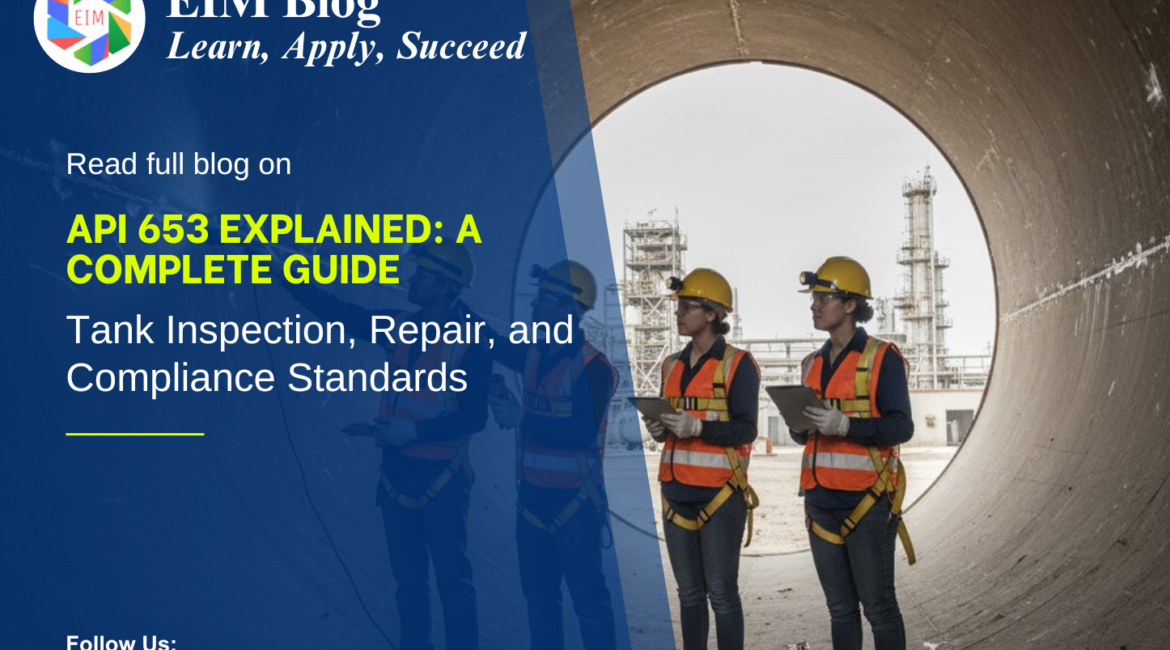
API 653 Explained: A Complete Guide to Tank Inspection, Repair, and Compliance Standards
In industries like oil & gas, petrochemicals, and power generation, aboveground storage tanks (ASTs) are vital for storing crude oil, refined products, and chemicals. However, over time, these tanks face corrosion, fatigue, and mechanical stress — increasing the risk of leaks or catastrophic failures.
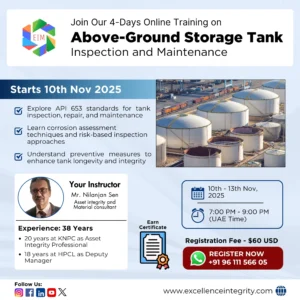
This is where API 653 – Tank Inspection, Repair, Alteration, and Reconstruction plays a crucial role. Published by the American Petroleum Institute (API), this standard provides comprehensive guidelines to ensure the structural integrity, safety, and operational reliability of storage tanks throughout their lifecycle.
What Is API 653?
API 653 is the industry-recognized standard that governs the inspection, maintenance, repair, alteration, and reconstruction of aboveground storage tanks built in accordance with API 650 and API 12C.
It defines:
-
Inspection intervals and methods
-
Minimum acceptable thickness and corrosion limits
-
Repair and alteration procedures
-
Reconstruction requirements for dismantled or relocated tanks
-
Qualification and certification of inspectors
The main objective is to ensure safe operation, prevent product loss, and minimize environmental impact.
Why API 653 Compliance Matters
1. Safety Assurance
Over time, tanks experience corrosion, settlement, and stress that may lead to failures. Regular API 653 inspections identify these risks early, ensuring tanks are safe for continued use.
2. Regulatory Compliance
Many jurisdictions and clients (including refineries, terminals, and chemical plants) mandate API 653 certification to meet environmental and safety regulations such as:
-
EPA’s SPCC (Spill Prevention, Control, and Countermeasure) Rule
-
OSHA Process Safety Management (PSM)
-
Local environmental authority requirements
3. Asset Protection and Cost Savings
Proactive inspection and repair help extend tank life, reduce unplanned outages, and avoid costly environmental clean-ups.
4. Industry Credibility
API 653 compliance demonstrates commitment to international best practices — a key factor for ISO certifications, audits, and client trust.
Scope of API 653 Standard
API 653 applies to tanks of any size or capacity built under API 650 or similar construction codes.
It covers:
-
Tank inspection frequency and methods
-
Welding and material requirements
-
Evaluation of settlement and foundation
-
Repair and alteration procedures
-
Reconstruction and relocation criteria
-
Hydrostatic testing requirements
-
Inspector qualifications
Types of API 653 Inspections
1. External Inspection
-
Frequency: Every 5 years (maximum interval) or sooner depending on service conditions.
-
Purpose: Check shell, roof, and bottom for corrosion, leaks, deformation, or coating deterioration.
-
Methods: Visual inspection, ultrasonic thickness (UT) testing, and coating evaluation.
2. Internal Inspection
-
Frequency: Every 10 years (or half the corrosion rate life of the bottom plate).
-
Purpose: Evaluate internal corrosion, bottom plate integrity, and weld joints.
-
Methods: Visual, magnetic particle testing (MT), and UT measurements.
3. Routine In-Service Inspection
-
Frequency: Monthly or quarterly visual walk-arounds.
-
Purpose: Detect leaks, foundation cracks, settlement, or abnormal noises.
-
Methods: External visual checks and leak monitoring systems.
4. Special Inspections
Performed after unusual events such as:
-
Seismic activity
-
Settlement or foundation failure
-
Overfilling or fire incidents
These inspections ensure tanks remain structurally sound and safe to operate.
Repair, Alteration, and Reconstruction Guidelines
1. Tank Repair
Repairs involve restoring the tank to a safe operating condition without changing its design. Typical repairs include:
-
Patch plate installation
-
Replacement of shell sections
-
Bottom plate repair or replacement
-
Nozzle and manway replacement
All welding work must follow API 650 welding procedures, and qualified welders must perform them.
2. Tank Alteration
Alteration refers to any change that affects the tank’s design, such as:
-
Increasing shell height (capacity expansion)
-
Adding new nozzles or manways
-
Modifying foundation design
Such changes require engineering calculations and design verification in accordance with API 650.
3. Tank Reconstruction
Reconstruction applies when a tank is dismantled and reassembled — either at the same site or another location.
API 653 mandates:
-
Documentation review of original design
-
Dimensional inspection of shell plates and components
-
Hydrostatic testing and settlement evaluation after reassembly
Qualification of API 653 Inspectors
API mandates that inspections must be conducted by certified API 653 inspectors.
To qualify, candidates must have:
-
Relevant experience in tank construction or maintenance
-
Understanding of welding, NDT, materials, and design codes
-
Successful completion of the API 653 Certification Exam
Certification is valid for three years and demonstrates the inspector’s ability to evaluate storage tanks per the standard.
Inspection Tools and Techniques
Modern tank inspection integrates advanced technologies to improve accuracy and reduce downtime:
-
Ultrasonic Thickness Testing (UT): Measures wall thickness and corrosion rates.
-
Magnetic Particle Testing (MT): Detects surface cracks and discontinuities.
-
Radiographic Testing (RT): Evaluates weld integrity and subsurface flaws.
-
Acoustic Emission (AE): Monitors active corrosion or leakage during service.
-
3D Laser Scanning & Drones: Capture geometric deformation and coating defects for large tanks.
These technologies support predictive maintenance — a major shift from reactive repairs to data-driven asset management.
API 653 vs API 650: What’s the Difference?
| Aspect | API 650 | API 653 |
|---|---|---|
| Purpose | Design and construction of new tanks | Inspection, repair, and maintenance of existing tanks |
| Focus | Engineering design, materials, and fabrication | Inspection intervals, fitness-for-service, and repair procedures |
| Applicability | New tanks only | Existing tanks built to API 650 or similar |
| Key Outcome | Safe, compliant tank design | Continued operational safety and compliance |
Together, API 650 and API 653 provide a complete lifecycle approach to tank management.
Environmental and Safety Impact
Leaks or failures in storage tanks can lead to:
-
Soil and groundwater contamination
-
Fire and explosion hazards
-
Regulatory fines and reputational loss
Adhering to API 653 helps operators:
-
Identify potential leaks early
-
Manage corrosion and stress effectively
-
Reduce risk of product release and environmental damage
In line with sustainability goals, many companies now integrate API 653 inspection programs with digital asset integrity systems to ensure continuous monitoring.
Common Challenges in Implementing API 653
-
Access Limitations: Internal inspections require tank shutdown and cleaning, which affects production schedules.
-
Data Management: Large facilities struggle to manage inspection reports, corrosion data, and history.
-
Qualified Personnel Shortage: Certified API 653 inspectors and welders are in high demand globally.
-
Corrosion Under Insulation (CUI): Difficult to detect without specialized NDT tools.
-
Documentation Compliance: Maintaining complete repair and inspection history for audits.
Modern solutions like digital inspection management software and drone-based surveys are helping overcome these challenges.
Best Practices for API 653 Compliance
-
Establish an Inspection Plan: Define inspection intervals, NDT techniques, and acceptance criteria.
-
Keep Detailed Records: Document all repairs, alterations, and test results.
-
Train Personnel: Ensure inspectors, engineers, and welders are API-certified and competent.
-
Use Predictive Maintenance: Employ corrosion monitoring and data analytics to anticipate failures.
-
Engage Accredited Service Providers: Always hire certified inspection and repair companies.
Conclusion
API 653 is more than a technical standard — it’s a framework for safety, reliability, and environmental stewardship in the oil & gas industry. By following its guidelines, companies can extend tank life, ensure compliance, and protect both people and the environment.
Whether you operate a refinery, terminal, or chemical plant, implementing a structured API 653 inspection program helps maintain integrity, optimize costs, and ensure readiness for audits or certifications.
In an era of increased environmental scrutiny and digital transformation, API 653 compliance is not optional — it’s essential.